Escrow Instructions
Escrow instructions don't get talked about enough. They're one of those documents that slides into your transaction quietly, gets signed, and disappears into a file, and most agents never look at them closely. That's a mistake. The escrow instructions are essentially the operating manual for your entire closing. They tell the escrow company exactly what to do with the money, the documents, and the conditions that have to be met before anyone gets anything. If something in there is wrong, you may not find out until it causes a real problem.
Why This Document Matters
The purchase agreement is the deal. The escrow instructions are the execution plan. Once escrow is opened, the escrow officer drafts instructions that translate your contract into specific, actionable steps for closing the transaction. These instructions govern how the earnest money deposit is handled, when funds are distributed, how prorations are calculated, and what conditions must be satisfied before the deed gets recorded.
In California, selling real estate involves a level of process complexity that catches a lot of people off guard. Escrow is not a formality here. It's a critical stage with its own documentation, its own timeline, and its own risks. California escrows have also been taking longer in recent years, which means there's more time for something to quietly go sideways if no one is watching closely.
The California Association of Realtors recognizes escrow instructions as a standard part of the transaction process, and while the specific format varies by escrow company, the content requirements are consistent across California practice.
How It Works
After an offer is accepted and escrow is opened, the escrow company prepares a set of written instructions based on the purchase agreement and any addenda. These are typically sent to all parties within three to five days of opening escrow.
Both buyer and seller need to review and sign the instructions. That signed document then becomes the binding directive for the escrow officer. They can only act on what the instructions authorize. If something isn't addressed in the escrow instructions, the escrow officer generally can't do it without a written amendment.
Any changes to terms after escrow opens, a credit adjustment, an extended close date, a modification to who pays for what, need to be reflected in amended escrow instructions signed by all parties. The original purchase agreement alone isn't enough. Escrow works from its own instructions, not your contract.
Key Sections Explained
Purchase price and deposit amounts. This section should match your purchase agreement exactly. The initial deposit amount, any increased deposit, and the final purchase price all need to be accurate. A discrepancy here can cause delays or disputes at closing.
Prorations. Property taxes, HOA dues, and sometimes rent if the property is tenant-occupied are prorated between buyer and seller based on the closing date. The escrow instructions specify the proration dates and the basis for calculation. An incorrect proration date means someone is paying more than they should.
Title insurance orders. The instructions direct the escrow company to order title insurance for both the lender (required) and the buyer (strongly recommended). They also specify which title company is being used and who is paying for each policy, per the terms of the purchase agreement.
Closing date. The scheduled close of escrow is documented here. This is the date the escrow officer is working toward when coordinating funding, document recording, and final disbursements.
Distribution of funds. This section details where the money goes when escrow closes. That includes paying off any existing liens, paying commissions, covering closing costs, and disbursing net proceeds to the seller.
Document recording instructions. The escrow instructions specify which documents need to be recorded with the county and in what order. The grant deed typically records first, followed by the deed of trust. The order matters legally.
Common Mistakes to Avoid
Not comparing the escrow instructions to the purchase agreement is probably the most common error. Agents assume the escrow officer captured everything correctly and move on. Real talk, escrow officers are professionals, but they're working from a contract they didn't write, and details get missed. It's your job to catch discrepancies before they become problems.
Missing the deadline to sign and return the escrow instructions is another one. Unsigned instructions can stall the transaction. Your client can't always be relied on to open every envelope from escrow and act quickly. Follow up.
Incorrect vesting on the buyer side is surprisingly common. How title will be held, whether as joint tenants, tenants in common, community property with right of survivorship, or through an entity, has real legal and tax implications. If the buyer hasn't decided or hasn't communicated their vesting choice clearly, the instructions may default to something that doesn't reflect their actual intent. This is worth a direct conversation early in the transaction.
Proration date errors are easy to miss but add up. If the closing date shifts and no one updates the proration calculation in amended instructions, the final numbers at closing won't be right.
Pro Tips from a TC
Cross-reference the escrow instructions against the purchase agreement line by line. Yes, actually do it. Purchase price, deposit amounts, commission instructions, credits, closing date, who pays for what. Flag anything that doesn't match and contact the escrow officer in writing to request a correction before the instructions are signed.
Get the buyer's vesting decision documented early. At or right after offer acceptance, confirm with your buyer how they intend to hold title and put it in writing. That way, when escrow asks, you have a clear answer ready and there's no scrambling.
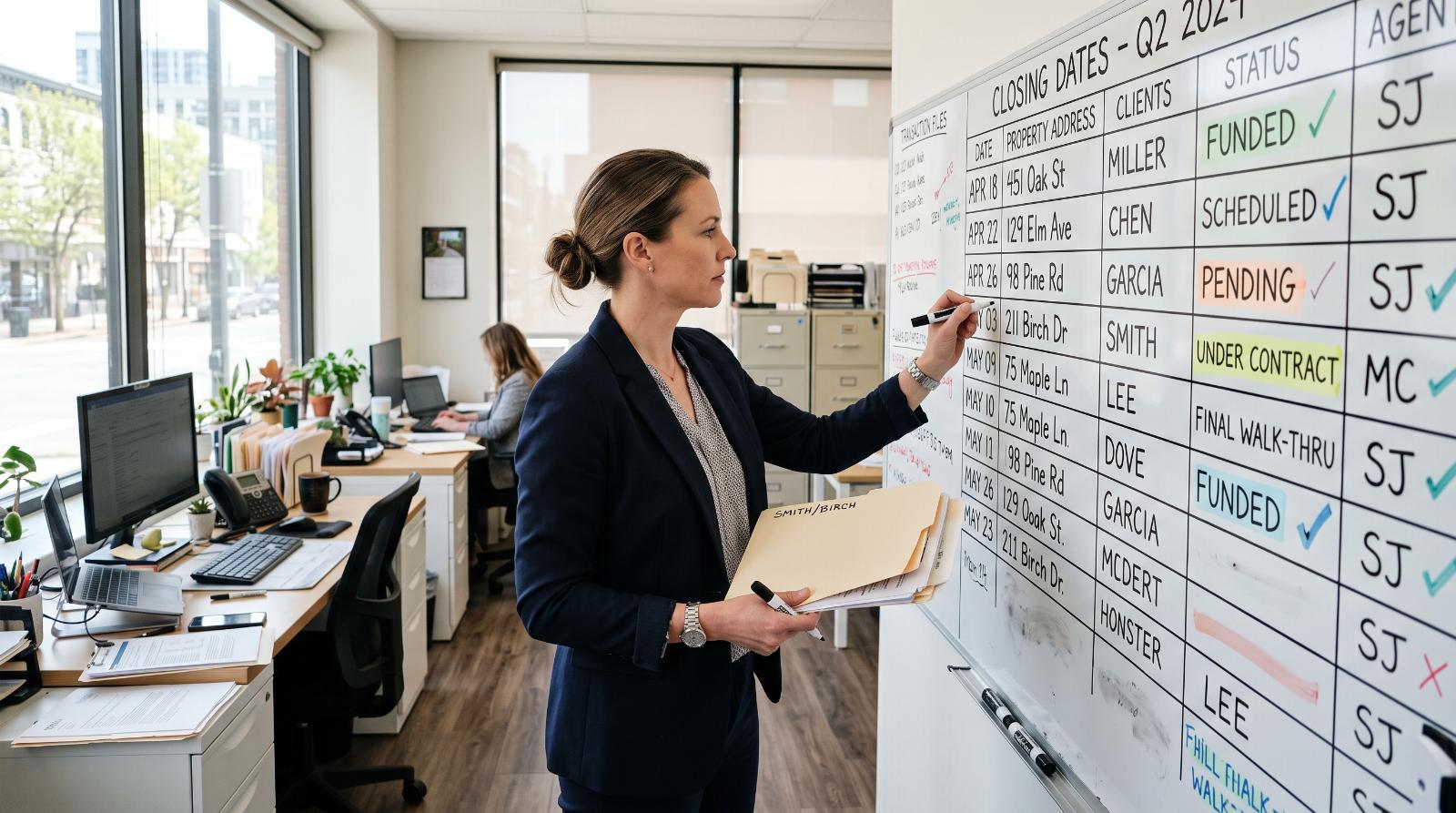
If you're managing multiple transactions, deadline management for documents like escrow instructions is exactly where things slip. The return deadline for signed instructions might not even be on your timeline if you're tracking things manually. A good TC has this covered as a matter of routine.
Keep a copy of the signed escrow instructions in your transaction file. When a question comes up at closing about how a credit was supposed to be applied or what the proration basis was, you want to be able to pull that document quickly.
Related Documents
- Purchase Agreement (RPA) - the source document escrow instructions are drafted from
- Buyer Representation and Broker Compensation Agreement (BRBC) - commission terms that flow through to escrow instructions
- Vesting Decision / How to Take Title - directly tied to what gets recorded in the instructions
- Amendment to Purchase Agreement - any change to deal terms requires amended escrow instructions
- Preliminary Title Report - ordered through escrow per the instructions
Frequently Asked Questions
Q: What happens if I find an error in the escrow instructions after they've been signed?
You can correct it through amended escrow instructions. Contact the escrow officer, explain the discrepancy, and request an amendment. Both parties will need to sign the corrected version. The faster you catch it, the better. Errors discovered at or near closing create delays and sometimes cost someone money, especially if proration amounts or credits are involved.
Q: Does the escrow company write the instructions from scratch every time?
Most escrow companies use standard templates that they customize for each transaction. The template structure is consistent, but the specific terms, amounts, dates, and conditions are pulled from your purchase agreement and addenda. That customization process is where errors can creep in, which is why reviewing the finished instructions against your contract matters.
Q: Are escrow instructions different from the purchase agreement?
Yes, they serve different purposes. The purchase agreement is a contract between buyer and seller. The escrow instructions are directions given to a neutral third party, the escrow company, telling them how to process the transaction. The instructions are drafted to be consistent with the purchase agreement, but they're a separate document with their own legal standing. Escrow operates from its own instructions, not from the purchase agreement directly.
---
If reviewing escrow instructions, chasing down signatures, and catching proration errors sounds like a lot to add to your plate on top of actually working with clients, that's what Relaxed Agent handles. As a California virtual TC service, this is the kind of detail work that gets done on every file, so nothing slips through the cracks while you're focused on the next deal.
Learn About Other Documents
Notice to Buyer to Perform
A notice from the seller demanding that the buyer perform a contractual obligation (such as removing contingencies or depositing funds) within a specified time period.
Cancellation of Contract
A form used to cancel the purchase agreement when a party has the right to do so, typically during a contingency period or after a breach.
California Residential Purchase Agreement
The primary contract for purchasing residential real estate in California, containing all terms, conditions, contingencies, and timelines for the transaction.