Forty eight listings. Banned from Zillow and Trulia for the entire life of the listing agreement. Not a warning. Not a temporary flag. Gone, for as long as the seller is under contract with that brokerage.
Forty three of those forty eight belonged to Compass.
That's not a rumor from a Facebook group. That's what actually happened after Zillow rolled out its Listing Access Standards and started enforcing them. If you've been hearing conflicting things about whether going off-MLS gets your listing blacklisted, here's the current, accurate version of what's actually true right now.
A lot of the confusion out there is because the rules genuinely changed twice in one year. What got an agent banned in 2025 isn't necessarily what gets flagged today. If you're relying on advice from a coaching call or a brokerage memo from last summer, there's a real chance you're working from an outdated version of this policy.
What Zillow's Listing Access Standards Actually Say
Zillow introduced its Listing Access Standards, commonly shortened to LAS, back in April 2025. The core idea is simple. If a listing is marketed to some buyers, Zillow's position is that it should be marketed to all buyers.
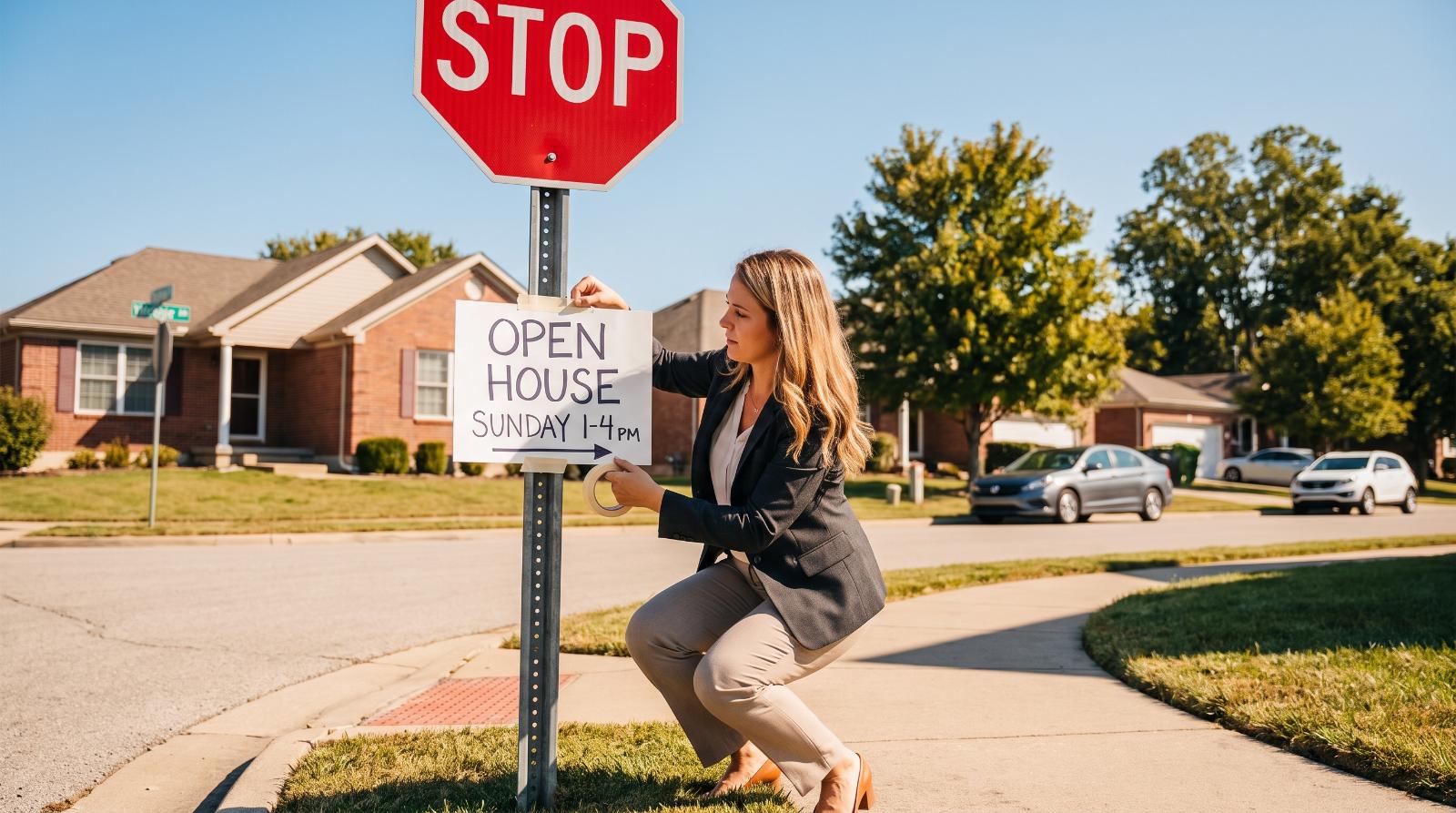
In practice, that means any listing under an exclusive for-sale agreement that gets publicly marketed, a yard sign, a social media post, a listing on the brokerage's own website with an address or price attached, has to be entered into an MLS within one business day and made accessible through IDX or VOW feeds. If it isn't, Zillow won't publish it. Not temporarily. Not with a warning label. It simply never shows up on Zillow or Trulia for the duration of that listing agreement.
The policy went through a phased rollout starting in May 2025, with real enforcement beginning June 30, 2025. Under the original version, a third violation, and everything after it, triggered a permanent block. That's the mechanism that produced the 48 banned listings, the overwhelming majority tied to Compass's off-MLS marketing strategy.
Zillow was specific about what counted as a violation from the start. Posting a "coming soon" teaser with a price or address on Instagram or Facebook before the listing hit the MLS was the single most common trigger, accounting for a majority of the early bans. A yard sign going up before MLS entry counted too. So did a page on a brokerage's own website naming the property before it was searchable anywhere else. The pattern across nearly every banned listing was the same: public exposure first, MLS entry delayed or skipped entirely, usually as part of a deliberate listing management strategy meant to build early buyer interest before opening the property to the broader market.
The Compass Fight, and How It Actually Ended
Compass didn't take this quietly. The brokerage sued Zillow, arguing the policy amounted to anticompetitive conduct designed to force listings onto Zillow's platform against agents' wishes.
A federal judge disagreed. On February 6, 2026, the court rejected Compass's legal challenge and upheld Zillow's right to enforce its own listing access standards. That ruling mattered. It meant Zillow wasn't backing down under legal pressure, and any agent still betting that the policy would get struck down in court needed a new plan.
The ruling also settled a question a lot of agents had been asking privately. Plenty of brokerages were watching the Compass case before committing to their own private-listing strategy, treating the lawsuit's outcome as a signal for whether off-MLS marketing was a safe long-term play. Once the court sided with Zillow, that signal became clear. Building a marketing strategy around avoiding MLS entry wasn't a gray area waiting to get resolved in Compass's favor. It was a losing legal position.
Six weeks later, on March 18, 2026, Compass dropped the lawsuit entirely. In response, Zillow updated and simplified its standards. The current version is meaningfully different from the original 2025 policy, and this is the part most agents haven't caught up on yet. Coverage of the settlement from HousingWire framed it less as Zillow backing down and more as Zillow narrowing its rules to something both sides could actually live with long term.

What's Actually Allowed Now
Under the updated policy, truly private listings, meaning ones that are never publicly marketed at all, are fine. If a seller wants their home kept entirely off public marketing and signs a written acknowledgment of that tradeoff, Zillow has no issue with it. That listing was never going to show up on Zillow anyway, so there's nothing to ban.
Office Exclusives are also fine, as long as they stay inside the brokerage or in direct one to one communication with actual clients, not broadcast publicly. Sneak peeks on social media or email are permitted too, but only if they skip the price, the address, and any call to action like "DM me for details." The moment identifying details show up in a public post, the clock starts. You have one business day to get that listing into the MLS or it's exposed to a violation.
What still gets flagged: publicly marketing a listing, meaning a yard sign, a social post with an address, a page on your own website, without MLS entry within a business day. Selectively marketing to buyers who aren't already your clients while withholding the listing from everyone else. Advertising "off-market access" as a perk if a buyer agrees to work with your brokerage specifically. Those are the practices Zillow built this policy to stop, and they're still banned under the current version.
Why This Traces Back to Clear Cooperation
None of this exists in a vacuum. The National Association of Realtors' Clear Cooperation Policy set the original standard that public marketing requires MLS submission within one business day. Zillow's rules were originally written to be even stricter than Clear Cooperation and stricter than some local MLS rules, specifically because NAR's own enforcement posture around Clear Cooperation has loosened in some markets over the past two years.
That gap, MLSs relaxing enforcement in some regions while brokerages like Compass push private listing networks, is exactly what Zillow says it's trying to close. Zillow has been explicit that the goal isn't rule-making for the industry generally. It's a platform decision about what appears on Zillow specifically. But because so much buyer traffic flows through Zillow, the practical effect functions like an industry rule whether or not that was the intent. Inman's ongoing coverage of the broader Zillow, Compass, and MLS dispute has tracked this tension for over a year now, and it isn't fully resolved even after the lawsuit ended.
For California agents, this matters more than it might in smaller markets. CRMLS, the California Regional MLS, is the largest MLS in the country by subscriber count, and its member agents are directly affected by how strictly Zillow enforces this policy against listings that skip MLS entry. If your brokerage or team is testing a private-first marketing strategy anywhere in a CRMLS coverage area, you're operating inside exactly the environment this policy was built to catch. Whatever tools your team already uses to manage listing syndication, this is worth confirming directly rather than assuming your current setup handles it automatically.

The Fair Housing Angle Nobody Mentions
Zillow's own public reasoning for the policy leans heavily on a consumer protection and fair housing argument, and it's worth taking seriously beyond the platform politics.
Zillow has argued that selectively marketing listings, sharing them with some buyers and not others, disproportionately affects communities of color, citing research suggesting off-MLS selling can cost sellers thousands of dollars on average compared to broad market exposure. Whether or not you find that framing persuasive as a business matter, it's the argument that's shaping how this policy gets defended publicly, and it's worth understanding if a client asks why their listing strategy is being scrutinized.
There's a real liability angle buried in this too. Selectively choosing which buyers get access to a listing, even informally, edges toward exactly the kind of disparate treatment concern that fair housing law exists to catch. A private listing strategy built around "call me directly if you want early access" can look very different in a fair housing complaint than it does in a marketing meeting.
What to Actually Check Before Your Next Listing
If you're taking a new listing anywhere in California, walk through this before you put anything public.
Decide upfront whether this listing is going fully private, meaning no public marketing at all, or publicly marketed from day one. The middle ground, quietly showing it to a few buyers while telling the seller it's "coming soon," is exactly the gray zone that gets flagged.
If you're doing any public marketing, a sign, a social post, a page on your website, build the one business day MLS entry deadline into your process the same way you'd track any other transaction deadline. This isn't a soft guideline. It's the difference between a normal listing and one that's permanently unsearchable on the platform most buyers start with. Treat it with the same seriousness you'd give a contingency deadline, because the consequence of missing it, in this case, doesn't go away after escrow closes. It follows the listing for the life of the agreement.
If a seller specifically wants to test the market privately first, get that decision in writing, and be honest with them about the tradeoff. Zillow's own data, and most independent research on the subject, suggests broader exposure tends to produce better outcomes for sellers. A seller who chooses privacy anyway should be making that choice with real information, not because the agent wanted to avoid the MLS clock.
Once you do publish, make sure your listing description and marketing actually earn the exposure you're now guaranteed to get. There's no point fighting this hard to stay compliant if the listing itself doesn't convert once buyers see it. And check that your MLS entry process doesn't have any built-in delays, some brokerage systems queue MLS submissions overnight or batch them, which can quietly eat into your one-day window without anyone noticing until it's too late.
The Part That's Easy to Miss in a Busy Pipeline
None of this is complicated in isolation. One business day, MLS entry, no selective access. The problem is bandwidth, not comprehension. An agent juggling six active files doesn't always remember that the social post they scheduled Tuesday morning started a countdown clock they now have to track separately from everything else on that file.
That's exactly the kind of detail that gets missed when nobody's specific job is watching for it. If you're the one tracking every deadline across a growing pipeline, a transaction coordinator catching this kind of timing issue before it becomes a permanent platform ban is worth more than the subscription fee on whatever CRM you're already paying for.
Check your active listings today. If anything went public more than a day ago and isn't showing up in your MLS feed, that's not a someday problem. That's a today problem, and the clock started the moment that post went live.