
The Number Buyers See Before They See Your Listing
Every listing has two versions. There's the one with the photos and the description you wrote. And there's the one buyers actually see first: a number next to the address that says how long it's been sitting there.
Fall makes that number climb faster than it should. Fewer buyers touring, more time between showings, and suddenly a perfectly fine house looks like it's been rejected by everyone who walked through it. Buyers notice. Their agents notice more.
Once days on market crosses whatever the invisible threshold is in your area, usually somewhere past three weeks in a normal cycle, people stop asking "is this a good house" and start asking "what's wrong with it." That shift in framing costs sellers more than almost anything else in a slow season, and most agents respond to it with either a knee-jerk price cut or nothing at all.
What Actually Resets When You Relist
Here's where a lot of agents get this wrong, so it's worth being precise. When you cancel a listing and resubmit it, two different numbers are in play, and they don't behave the same way.
Days Active in MLS is the counter tied to the current listing instance. It goes back to zero the moment you relist. Cumulative Days Active in MLS, usually written as CDAM, tracks the total time the property has spent on the market across every relisting, and it doesn't care how many new MLS numbers you generate.

California changed the math on this recently. CRMLS, the largest MLS in the state, shortened the CDAM reset window from 90 days down to 31 days as of November 2025. That's a real difference. A listing that needed three full months off the market to look genuinely fresh now needs about a month.
Zillow runs its own separate clock on top of that. According to Zillow's own help documentation, the Days on Zillow counter for MLS-sourced listings resets only if the property was off-market for 31 or more consecutive days, regardless of what your local MLS decides internally. So even with CRMLS's shorter window, you still need a full month of genuine silence for the public-facing number to actually reset.
What a Price Cut Actually Signals
A price reduction by itself is just a number moving down. What it signals to a buyer depends entirely on how and when it happens.
A quiet, unexplained cut on day 45 reads as desperation. Buyers and their agents read it that way because it usually is desperation, a seller who priced too high and is now negotiating against themselves in public. Negotiation coverage from outlets like Forbes keeps making the same point: the party who moves first and alone, with no accompanying story, gives away leverage for nothing in return.
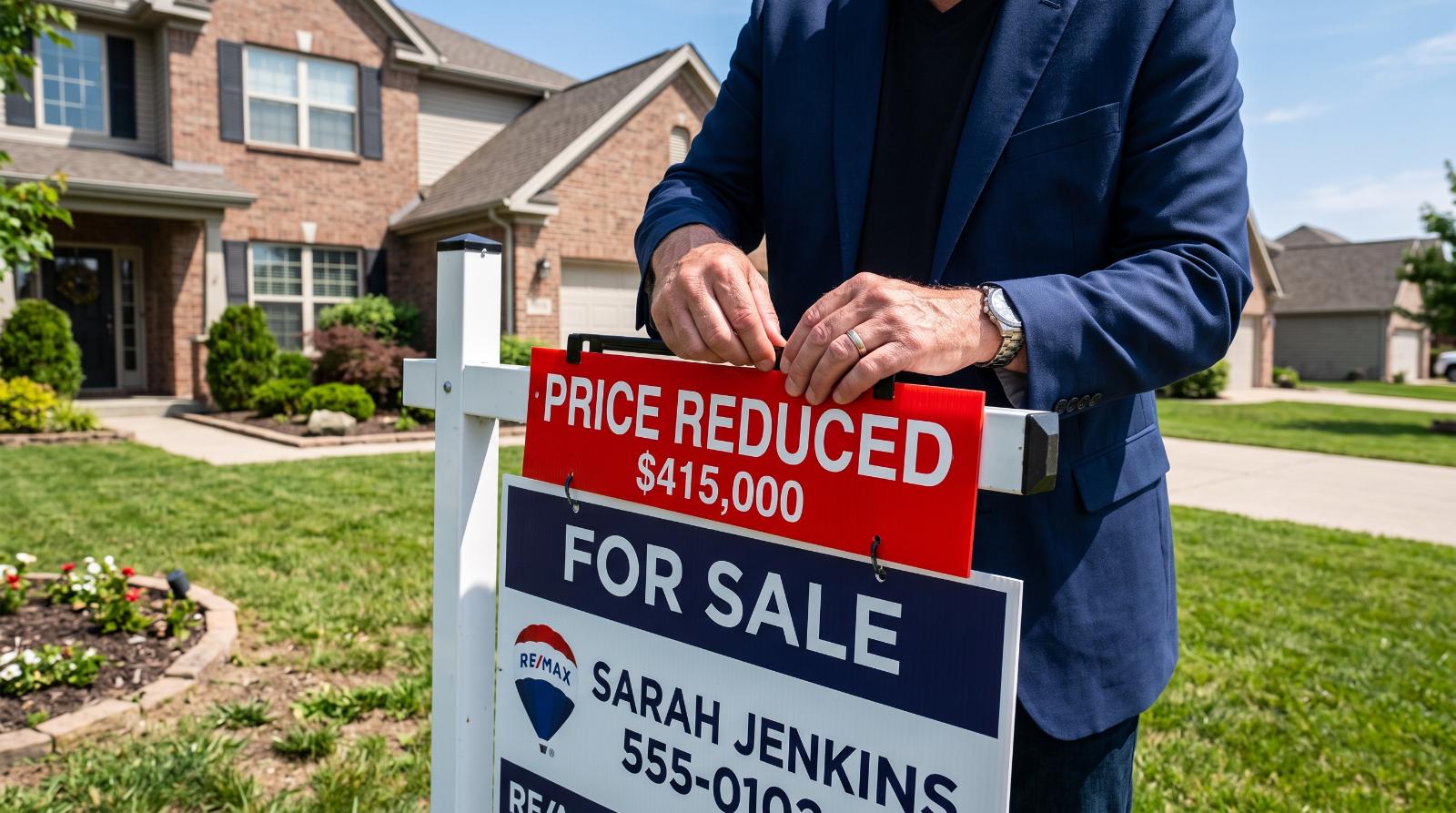
A price adjustment paired with a genuine refresh reads completely differently. New photos, an updated listing description, maybe a relisted MLS number if the timing works out. Now the price move looks like part of a repositioning, not a surrender. Same dollar amount. Different story. Buyers respond to the story more than the math.
When Relisting Actually Makes Sense
Relisting earns its keep when something about the listing genuinely changed since it first went live, not just the calendar.
The photos are dated, shot in a different season or before a staging refresh. The description still reads like it was written for a market that had five competing offers a week. The price is now aligned with comparable sales instead of aspirational. Any one of these is a legitimate reason to take the listing dark for a month and come back with something that actually looks new, because it is.
This is also the moment to double check your marketing is still on solid ground. If you're refreshing photos, California's disclosure rules around edited listing images still apply to the new set, not just the original ones. And if any part of the relaunch involves teasing the property publicly before it's back in the MLS, that's exactly the territory covered in Zillow's listing access rules, which haven't gotten more forgiving.
When It's Just Delaying the Real Problem
Relisting doesn't fix an overpriced house. It just buys the house a few weeks of looking new before the same buyers who already saw it once notice it's back with the same price and the same three photos taken from the driveway.
Local buyer's agents remember addresses. If your relisted property shows up with a suspiciously fresh days-on-market count and an identical price, the sophisticated ones will say something to their clients, and it won't help you. NAR's own guidance on market transparency exists precisely because buyers are supposed to be able to trust that a clean number means a genuinely new opportunity, not a cosmetic reset.
If the price hasn't moved, the photos haven't changed, and the only thing different is the MLS number, that's not a relist strategy. That's just a delay tactic wearing a relist costume, and most experienced buyers can tell the difference within thirty seconds of pulling up the listing history.
How to Do a Relist Right
If a listing genuinely needs a reset, do the whole thing properly instead of half of it.
- Get a real explanation for why it didn't sell the first time, price, condition, photos, or exposure, before deciding what to change
- Take new photos in current light and current season, not recycled shots from the original listing
- Rewrite the description instead of copying it over. If it read flat the first time, it'll read flat again
- Time the price move to land with the relaunch, not weeks before or after it
- Confirm the off-market window actually clears your MLS's CDAM reset before you resubmit, thirty days short of the mark defeats the whole point

None of this requires new software, though it's worth checking what's already sitting in your stack. Plenty of agents already have tools listed on popular agent tools that handle photo scheduling and listing syndication and just aren't using them for this. And if the whole relaunch feels like more coordination than you have bandwidth for on top of an active pipeline, that's exactly the kind of detail work listing management support exists to catch.
A slow market punishes sellers who wait and reward sellers who reposition. Coverage across the industry keeps circling the same point about markets like this one: the listings that sit are rarely the wrong houses. They're usually the ones nobody bothered to make look new again.
Next time a listing crosses the point where you're tempted to just knock ten thousand off the price and hope, ask what story that price cut is telling on its own. If the answer is nothing, it's not ready to go out yet.


