The Sky Swap That Could Get You a Misdemeanor
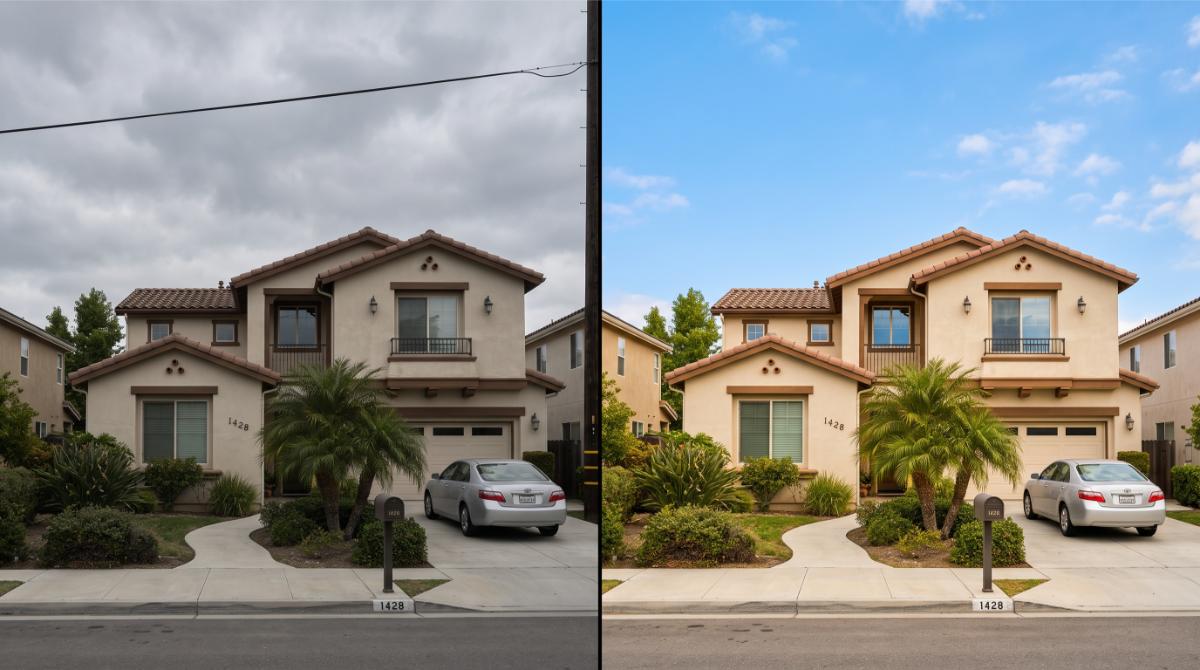
Somebody on your team pulled a power line out of a listing photo last week. Swapped a flat gray sky for something bluer. Made the lawn look like it hadn't given up in July. Nobody thought twice about it, because that's just what you do now. Except since January 1, 2026, that quick fix is a legal disclosure event in California, not a harmless touch up your broker mentioned once in a meeting everyone was half listening to.
The law is AB 723. It's been live for over six months, and a HousingWire study from late June found something worth sitting with. Across the four biggest real estate portals, roughly one in ten primary listing photos showed digital alteration. Over 90 percent of those had zero disclosure. Sky replacement was the single most common edit. If that's the industry average, your MLS compliance team already knows your brokerage is somewhere in that number.
What AB 723 Actually Says
The bill added Section 10140.8 to California's Business and Professions Code. In plain terms, if a broker, agent, or anyone acting on their behalf uses a digitally altered image in an ad or promotional piece, that image needs a reasonably conspicuous statement disclosing the alteration, plus a link, URL, or QR code pointing to the original, unedited photo. Not buried in a caption nobody reads. Next to the image, where a buyer actually sees it.
The law draws a real line between two kinds of edits. Cosmetic corrections, exposure, white balance, cropping, color correction, generally don't trigger disclosure. Edits that change what's physically represented in the photo do. That includes adding, removing, or altering furniture, fixtures, appliances, flooring, wall color, landscaping, exterior finishes, the view through a window, street features, or neighboring properties. If the edit changes what a buyer would see standing on the sidewalk, it counts.
This isn't a suggestion sitting quietly inside MLS ethics guidelines the way virtual staging etiquette used to. It's California Real Estate Law now, with the DRE holding enforcement authority that includes regulatory discipline, civil liability, and, for willful violations, criminal exposure. That last part isn't hyperbole. Multiple attorneys covering this law have flagged that a willful violation of real estate licensing statutes in California can be charged as a misdemeanor. That's a different conversation than an MLS compliance email asking you to swap a photo.
The Data Says Nobody's Actually Following It Yet
Here's where the HousingWire numbers get specific enough to matter for how you shoot and edit listings. Exterior photography showed alteration at nearly three times the rate of interior shots, 13.1 percent versus 4.5 percent. Living rooms and bedrooms followed at 6.4 percent and 5.9 percent, almost entirely driven by virtual staging. Kitchens barely registered. Bathrooms were close to zero across every portal studied.
Translation: the risk isn't evenly spread across a listing. It's concentrated in the exterior hero shot and the empty rooms your photographer virtually furnishes to make a vacant home feel livable. Those are exactly the images most likely to get the most views on Zillow, Redfin, and your own IDX feed, which means they're also the images most likely to end up in a complaint if a buyer feels misled after a showing that didn't match the listing.

Why This Hits Marketing Harder Than Compliance
Every brokerage conversation about AB 723 so far has framed it as a legal issue. It's also, quietly, a branding problem. We've said before that branding in a crowded market comes down to trust more than aesthetics, and there's no faster way to torch trust than a buyer standing in a driveway realizing the listing photo lied about the sky, the lawn, or the neighbor's fence.
Think about what happens downstream. A buyer drives an hour to see a home because the listing description and photos sold them on a vision that doesn't match reality. That's not just a wasted showing. That's a buyer who now assumes every other photo on your page is staged fiction too, and tells their agent that in the parking lot. Undisclosed edits don't just risk a DRE complaint. They erode the exact credibility your social media presence and Facebook ad campaigns are built to earn in the first place.
What This Actually Looks Like Day to Day
Nobody needs to stop editing photos. AB 723 doesn't ban virtual staging, AI touch ups, or enhancement. It bans doing it quietly. A few things worth building into your listing workflow this week:
- Confirm with your photographer or editor exactly which edits were cosmetic versus representational before the photos go live, don't assume you'll remember which lawn was real
- Add a visible disclosure label directly on or beside any altered image, not in the listing description three paragraphs down
- Keep the original, unedited photo accessible via a link or QR code the buyer can actually find, this is a requirement, not a nice to have
- Brief your team the same way you'd brief them on any new disclosure requirement, because "the editor did it" isn't a defense that holds up with the DRE
- Check your MLS's specific guidance, since interpretation of what counts as an edit can vary by system, and CRMLS in particular has already updated its rules to match the statute
The Bigger Pattern
AB 723 didn't arrive alone. It landed the same year as new electrical and disclosure rules on the transaction side, part of a broader push toward transparency that's reshaping how selling real estate in California works from the listing photo all the way through closing. Every year the state adds another layer, and every year the agents who treat it as a five minute compliance check outperform the ones who find out from a buyer's attorney.
This is also a moment where your marketing strategy and your legal exposure are the same document. Sponsoring a local event builds trust over months. One undisclosed sky swap can undo it in a single showing. If you've been tracking 2026 marketing trends and wondering what actually separates agents who are thriving from agents who are getting complaints filed against them, this is a real answer. It's not creativity. It's whether your listing photos say what actually happened to them.

One Practical Note Before You Panic
Precedent so far suggests the law applies to listings posted after January 1, 2026, not retroactively to anything already live before that date. But re-listed or reactivated properties should be treated as fully subject to the rule. If you've got an old listing sitting dormant that you're about to reactivate for a price change, that's the moment to audit the photos, not after a buyer asks a question you can't answer cleanly.
None of this is complicated once it's built into your process. It's only expensive when it's discovered after the fact, in a complaint, by someone who didn't need to explain the sky.
So look at your last three active listings right now. Any sky swaps in there? Any staged rooms without a label? If you're not sure, that's the actual test AB 723 just handed you.