

The AVID: The Form Agents Rush and Then Regret
Most agents treat the AVID like a formality. It's not. Here's what you're actually signing up for when you blow past it.
What the AVID Actually Is (and Isn't)
Walk into any listing appointment in California and ask the seller's agent how long they spent on their AVID. The honest ones will look away.
The Agent Visual Inspection Disclosure is a required form in California residential transactions, and it gets treated like a speed bump. Agents initial it, check a few boxes, and move on. It sits in the file looking complete when it isn't. Not really.
Here's the thing: the AVID is not a home inspection. You are not expected to pull permits, crawl under the house, or diagnose the diagonal crack running from the window frame to the ceiling. The California Department of Real Estate is clear that your job is to observe and report what is visibly apparent during a reasonably competent walkthrough of the property. What you can see. What you notice. What smells off.
The form exists because buyers make enormous financial decisions based partly on what their agent observed while walking through a home. If you noticed the water stain above the kitchen cabinet and said nothing, that's not a minor paperwork issue. That's a problem.
And unlike the Transfer Disclosure Statement, which captures what the seller discloses, the AVID is yours. Your observations. Your signature. Your exposure if something was obviously there and you said nothing about it.

Why Agents Rush It and What That Costs Them
Nobody rushes the AVID because they're trying to hide something. They rush it because they have three other showings that afternoon, the buyer is standing behind them asking questions, and by the time they've reviewed the Seller Property Questionnaire and the Natural Hazard Disclosure Statement, the AVID starts to feel redundant. Like the last page of a terms and conditions agreement.
But the SPQ and NHD capture what the seller discloses. The AVID captures what you observed independently. Those are two completely different things, and they don't always match.
A seller might genuinely not know about the efflorescence on the garage wall. Or they know and omitted it. Either way, if you walked past it without noting anything, you're now attached to that omission. The buyer's attorney isn't going to care that you were in a hurry.
The National Association of Realtors tracks litigation trends in real estate, and disclosure failures consistently rank among the top sources of complaints against agents. Not dual agency conflicts. Not commission disputes. Disclosure. The mundane, form-filling part of the job that people blow through.
Missing something on the AVID doesn't automatically mean a lawsuit. But when a buyer discovers a problem after close and starts looking backward at the transaction, the first thing their attorney pulls is the disclosure file. A sparse AVID on a property with obvious issues is a bad place to be. The California Association of Realtors provides guidance on agent liability in these scenarios, and the standard for what "should have been noticed" tends to be set by what any reasonably attentive agent would have caught.
What You're Actually Supposed to Document
You're walking through the property as a licensed professional. Write down what you see.
Water stains on ceilings or walls. Cracks in drywall, especially diagonal ones near door frames. Damaged or uneven flooring. Signs of patching or fresh paint in unexpected places. Windows or doors that don't operate properly. Odors suggesting moisture, mold, or pets. Grading issues in the yard that suggest drainage problems. A water heater that looks significantly older than the listing claims. Rust stains in the shower. A garage floor with oil stains that suggest years of slow leaks.
You don't have to know what caused any of it. You just have to note that it's there.
You're not playing home inspector. The home inspection report handles the deeper dig. Inspectors carry instruments and training you don't. Your job is to document what you can see, smell, and hear without specialized tools. The AVID is observational, not diagnostic.
One practical move: use your phone to photograph anything you plan to note during the walkthrough. You don't have to include the photos in the transaction file, but they help you remember what you saw two weeks later when you're completing the form. Memory degrades fast when you have four deals in escrow simultaneously.
If you're working with a transaction coordinator, a good TC will flag a vague or incomplete AVID before it becomes someone else's problem. It's one of the first things our team at Relaxed Agent reviews when a new file comes in, not because we're auditing agents, but because gaps in the disclosure package create friction later, sometimes at the worst possible moment.

The Liability Nobody Talks About Until It's Too Late
California operates under one of the more aggressive disclosure frameworks in the country. The California Civil Code Section 2079 spells out agent inspection and disclosure duties, and the standard isn't perfection. It's competence. Did you look? Did you document what you saw? Did you report it properly?
A completed AVID is one layer of protection in a transaction that has many. It works alongside the Statewide Buyer and Seller Advisory, the TDS, and whatever local disclosure forms your county requires. None of them replace each other. They each capture something different.
Where agents get into trouble is treating the AVID like an afterthought. If your AVID says "no visible defects" on every single property you've ever sold, that's not a reflection of California real estate. That's a pattern that could look very bad in mediation or arbitration.
The American Bar Association has written on how courts evaluate real estate disclosure disputes, and judges consistently look at whether the agent demonstrated a reasonable standard of care. A one-line AVID on a 1960s home with deferred maintenance is hard to defend.
Real estate transactions in California are document-heavy by design. The California Residential Purchase Agreement alone runs 17 pages. The AVID is a small form with big implications, and treating it like background noise in that stack is where agents create exposure they don't see until it's in a letter from opposing counsel.

How a Thorough AVID Makes You Look Like a Pro
Here's the version of this that doesn't involve attorneys.
Buyers notice when their agent is thorough. They don't always know the difference between a complete AVID and a rushed one, but they notice when you slow down during a walkthrough and actually look at things. When you say, out loud, "I'm going to note that patch on the ceiling in the AVID," that moment of transparency does something. It tells the client you're working for them, not just moving them toward close.
That kind of care generates referrals. Not in a transactional, ask-for-a-review way. In a "my agent caught something nobody else mentioned" way that clients tell people about for years.
Cooperating agents notice too. An AVID that clearly reflects an attentive walkthrough says something about how you operate. It's part of your professional reputation, even if nobody ever reads it aloud. As HousingWire has noted in coverage of agent professionalism trends, buyers are increasingly choosing agents who demonstrate competence through process, not just personality.
Top agents slow down during walkthroughs. They don't look at a property the way a buyer does, admiring the kitchen or imagining where the couch goes. They look at it the way a TC or a claims adjuster would look at it afterward: what's here, what should be noted, and what would I wish I'd written down.
The AVID is where that habit shows up on paper.
The 20 Minutes That Protects Everything
Set aside real time for the AVID. Not the drive back to the office. Not between calls. During the walkthrough itself, when you're physically in the property and can observe what's actually there.
Bring the form or access it on your phone. Walk every room with the same attention you'd give a listing you were about to put on market. Open closets. Look up. Look at the baseboards. Look behind the refrigerator if the space is accessible. Note anything inconsistent, patched, worn in a way that seems off, or unusual enough that a buyer might later wonder if you saw it.
Write in plain language. "Visible water stain approximately six inches in diameter on living room ceiling near north window" is infinitely more useful than "some staining noted." The specificity protects you and gives everyone in the transaction clear information to work with.
If you consistently spend fewer than ten minutes on your AVID, you're moving too fast. Fifteen to twenty minutes for a standard home is a reasonable baseline. Older homes, deferred maintenance situations, or anything with visible water intrusion history needs more time. The Consumer Financial Protection Bureau consistently emphasizes the role of full disclosure in creating buyer confidence in real estate transactions, and the AVID is one of the most direct expressions of that principle at the agent level.
Your broker's E&O coverage has a deductible. The buyer's attorney has billable hours. The AVID costs you twenty minutes and a little attention.
The math isn't complicated.

Why Your Leads Don't Convert (And It's Probably Not the Lead Source)
Agents spend $2,000 a month on leads then wonder why nobody's buying. The problem isn't the source. It's what happens after they arrive.
You know the narrative. Agent A spends $3,000 a month on leads. Gets 50 leads. Converts 2. Agent B spends $3,000 a month on the exact same source. Gets 50 leads. Converts 8. Same source. Different results. So the lead source isn't the problem.
The problem is what happens to the lead between the moment it arrives and the moment the agent actually talks to them.
Most agents believe the problem is "lead quality." The leads are cold. They're not motivated. They're just people scrolling Zillow filling out forms because they're bored. This narrative is comforting because it means it's not your fault. It's the lead source's fault.
Except that's not what's actually happening. You're getting good leads. You're just not talking to them fast enough, in the right way, with the right follow-up system. And by the time you get organized, someone else has already converted them.
Real Brokerage just spent four years building their entire competitive platform around this insight. They realized that the brokerage houses winning in 2026 aren't the ones with the best lead sources. They're the ones with the fastest response time, the best nurture sequences, and the most sophisticated lead scoring systems. And they're right.

The Response Time Problem (Which Is Easy to Fix)
Here's what actually kills lead conversion: response time. The lead comes in Thursday afternoon. You see it Friday morning. By Friday afternoon, someone else has already talked to them.
Studies from HubSpot show that contacting a lead within one hour makes you 7x more likely to have a meaningful conversation with them. After one hour, the conversion probability drops off a cliff. By the time you respond on Friday, the lead has already talked to three other agents.
Most agents don't respond to leads within one hour because they don't have a system for it. The lead goes into their email. Or their CRM. Or their phone. But there's no alarm. There's no immediate notification. So it gets buried under everything else.
The agents with the highest conversion rates have one thing in common: they respond to leads immediately. Not eventually. Immediately.
This doesn't mean you personally have to respond within one hour. It means someone has to. Either you have a team member designated to handle lead follow-up, or you have an automation system that sends an immediate response email the moment the lead comes in.
Follow Up Boss does this. Dotloop does this. Zoho CRM does this. You're probably not using it.
When a lead comes in at 3 PM Thursday, they should get an automated email at 3:01 PM that says something like: "Thanks for reaching out. I'll follow up with a call by 5 PM or Friday morning, whichever works for you. In the meantime, here's some info about the market in your area."
You're not lying. You actually will follow up. But the lead is getting a response within 60 seconds. Everyone else is responding Friday or Monday. So now you're the one who's responsive.
The conversion bump from this alone is usually 15-20%. You don't have to be better at sales. You just have to be faster.
The Lead Scoring Problem (Which Tells You Who To Call First)
Not all leads are the same. But most agents treat them like they are. Fifty leads come in. You call them all equally. Some answer. Some don't. Some are actually interested. Some are just shopping.
What if you could rank them by likelihood to convert before you even picked up the phone?
This is what lead scoring does. It looks at the information the lead provided and assigns a score based on how likely they are to convert. The lead said "I want to sell in the next month" is a 9/10. The lead said "just browsing" is a 3/10. You call the 9s first.
Most agents don't do this because building a lead scoring system sounds complicated. It's actually not. If you're using Follow Up Boss, it does lead scoring automatically. If you're using Dotloop, you can set it up with some basic rules.
The rule might look like: If timeline is "ASAP" and lead is "seller," score is 9. If timeline is "6 months" and lead is "buyer," score is 4. If they downloaded a "free home valuation guide" but didn't answer the timeline question, score is 5.
Now when you sit down on Monday morning and you've got 47 new leads, you don't work through them in order. You pull up the ones with scores of 8 or 9 first. You call those. The ones with scores of 3 or 4 go into a different nurture sequence.
This single change usually increases conversion by 25-35% because you're focusing effort on leads that actually want what you're selling.

The Nurture Sequence Problem (Which Is Where Most Leads Die)
You respond to the lead within an hour. You score them. You call. They don't answer. Now what?
Most agents send one follow-up email and move on. That lead is dead.
But actually, that lead usually isn't ready to talk yet. They're still shopping. They're still thinking about it. They're comparing agents. They need to be nurtured, not abandoned.
The agents with the best conversion numbers use nurture sequences. These are automated email/text/call flows that touch the lead repeatedly over days and weeks, with value, until they're actually ready to talk.
A good nurture sequence might look like:
Day 1: Automated welcome email with market data for their neighborhood.
Day 3: Automated text: "Hey, just checking in. Any questions about the market?"
Day 5: Automated email: "Here are the top 3 neighborhoods people like you are moving to right now."
Day 7: Phone call from you personally. "Hey I know you're just getting started, but I want to make sure you have my number for when you're ready to move forward."
Day 14: Automated email: "Market update for your area this week."
Day 21: Personal phone call or text checking in again.
The lead who didn't answer on day 1 is getting touched 6 times over three weeks. By week three, they're familiar with you. They've seen your knowledge of the market. They know you're responsive. And when they're actually ready to move, you're the person they think of.
Most agents don't do this because it requires a system. You can't manually send these. You need Follow Up Boss or Dotloop or something similar. And you need to actually set it up.
But here's the thing: your competitors aren't doing this either. So this alone is a massive competitive advantage.
The agents using good nurture sequences are converting 40-50% of leads that don't convert on day 1. The agents not using sequences are converting basically none of them.

The Data Hygiene Problem (Which Makes Everything Else Impossible)
You're buying leads. But are the leads you're buying actually clean data?
"Clean data" means the information is accurate, duplicates are removed, and formatting is consistent. Dirty data means you've got bad phone numbers, fake email addresses, the same person duplicated 17 times, etc.
If you're buying leads from a low quality source, you might be getting 30% dirty data. You spend time calling bad numbers. You send emails that bounce. You're chasing ghosts.
The best lead sources in 2026 are the ones that actually care about data quality. Real Brokerage's lead system is built on the concept that AI can identify bad data before it even hits your inbox. They score leads for quality, not just probability to convert.
If you're still buying leads from cheap sources, you're probably wasting 20-30% of your money on garbage leads.
Here's what to do: Look at your last 100 leads. How many of them were actually valid? How many phone numbers worked? How many emails bounced? Calculate your actual valid lead rate. If it's below 85%, you're buying bad leads.
Don't just switch to more expensive sources. Research the sources agents are actually using. Talk to agents at other brokerages. Ask what they pay and what their valid lead rate is. Then make a decision based on actual numbers, not what the lead company promises.
The Team Problem (Which Is Why Solo Agents Lose)
Here's the uncomfortable truth. If you're a solo agent trying to manage lead response time, lead scoring, nurture sequences, and data quality all by yourself, you're going to lose to team agents.
A team with a lead coordinator who focuses only on lead management and follow-up will always outconvert a solo agent trying to do it all.
This doesn't mean you have to build a big team. It means you need one person, even part time, whose job is managing leads. Not selling. Not doing transactions. Just working leads.
If you can't afford a team member, then you absolutely need to use automation. Follow Up Boss with a CRM that actually works. Automated responses. Automated nurture sequences. Automated lead scoring.
You're trying to compete with technology instead of people. It's not ideal. But it works better than trying to do it all manually.
Team leaders should absolutely hire dedicated lead coordinators. The ROI is immediate. A coordinator costs $2,500 a month. If they improve conversion by 20%, they pay for themselves in one agent's commissions.
Where Most Agents Actually Fail
You read this and you think: "Yeah I should do that." Then you don't.
You don't set up the automation because it feels complicated. You don't build the nurture sequence because it takes time. You don't hire the coordinator because it feels like an expense instead of an investment.
So you keep buying leads. You keep converting a small percentage. You keep thinking the problem is the lead source.
The agents who win do three things:
One, they set up a system for immediate response. Not eventually. Immediately.
Two, they build a nurture sequence that touches leads repeatedly over weeks, not hours.
Three, they either hire someone to manage leads or they spend the money on automation that does it for them.
That's it. That's the difference between 5% conversion and 35% conversion.

Your Past Clients Are Your Best Leads (If You Stop Ignoring Them)
Your past clients already trust you. They already bought or sold with you. And most agents forget about them completely until five years later.
There's a harsh truth in California real estate. Most agents spend thousands of dollars every month chasing new leads while the easiest leads they've ever had are sitting in a spreadsheet they haven't opened in three years.
Those are your past clients. The people who already know you. Who already bought or sold with you. Who already proved they trust you enough to give you one of the biggest financial decisions of their life. And most agents treat them like they don't exist.
Instead, the strategy becomes "I'll spend $3,000 on Google Ads to find a stranger who might maybe be interested in selling, when I could spend 15 minutes sending an email to someone who's already done business with me." The math on this is so bad it's funny. Except it's not funny because it actually costs you money.
Past clients aren't just your best leads. They're your only leads that come with built in trust. They're the leads that close faster. They're the leads that are most likely to refer their friends. They're the leads that become repeat business. And almost every agent is completely ignoring them.

Why You're Not Staying In Touch (And Why It Matters)
The answer is simple. Staying in touch requires a system. It requires consistency. It requires remembering who you worked with, when you worked with them, and what happened in their transaction.
Most agents rely on random memory and the hope that they'll think of old clients at some point. The result is that it never happens. Or it happens once a year when you feel guilty. You send a bulk holiday card email and hope that's enough.
It's not enough. But here's the thing. It could be.
The agents who are crushing it in repeat business and referrals aren't doing anything complicated. They've just built a simple system where staying in touch is automatic, not an afterthought. They have a way to contact past clients regularly. They have a reason to contact them that doesn't feel icky or salesy. They follow up when those clients actually do respond.
The result is that when someone they know wants to move, they think of the agent first. Not second. Not "oh I should probably call around," first.
It's not complicated. But it does require you to actually do it.
The Basic System: A Spreadsheet and Some Discipline
You don't need fancy lead nurturing software. You don't need an automated AI that sends emails pretending to be you. You need three things.
A list of every client you've ever worked with. Names. Phone numbers. Email addresses. When you worked with them. What happened (bought? sold? both?). Where they live. Their contact preferences (email or phone?). This takes a weekend to build the first time. Then you update it as you add new clients.
A content calendar. What are you going to send to these people and when? Monthly? Quarterly? What's the message? Market updates? Local event info? Just "hey how's it going?" The key is consistency. Sporadic contact doesn't build relationships.
A follow up mechanism. When someone responds, you actually talk to them. You don't just send mass emails and hope for the best. If someone answers the phone or replies to an email, that's a conversation. That's where the real lead generation happens.

Content That Doesn't Feel Salesy
The reason most agents don't stay in touch with past clients is because they're terrified of feeling like they're being used. Like they're only calling because they want a deal. Which is partly true. You do want a deal. But that can't be the reason you're calling.
Instead, stay in touch with actual value. Here are things that work:
Market updates for their specific area. "The neighborhood you bought in three years ago is up 18% in value. Here's what that means." Clients actually want to know this. It affects their wealth. It makes you the authority on their area.
Notification about local events. Street festival in their neighborhood next month. New restaurant opening near where they live. School programs or community fundraisers. Nothing real estate related. Just useful information about the place they live.
The "I was in your area" check in. You held a showing on their street. You drove past their house. You thought about them. "Hey, I was in your neighborhood last week doing showings. Your street has amazing trees. Hope you're enjoying the place." This is real. This is genuine. This is why you remembered them.
Seasonal stuff. How's the house holding up after winter? Got your AC serviced before summer? Gutter cleaning season? You're being helpful. You're not trying to take advantage.
Life event follow ups. You know when they bought. Did you remember on the anniversary? "Hey, three years ago today you closed on Maple Drive. Can't believe it's been that long. How's the house treating you?" People remember the big moments in their life.
Absolutely none of this is "want to sell your house?" None of it is "I'm running a promotion." None of it feels icky. And yet, when you stay in touch this way, the referrals and repeat business come naturally.
The Referral Ask (That Doesn't Feel Gross)
Here's where most agents fail. They build a system to stay in touch. It works. Their past clients like hearing from them. And then they blow it by asking for referrals in a way that feels like a sales pitch.
The mistake is asking directly. "Do you know anyone who's thinking about buying or selling?" This is the moment your past client goes quiet because now it feels like you were only calling to use them.
Instead, make the referral conversation organic. You've been in touch for six months. You've been helpful. You've sent market updates. You've asked how the house is treating them. Now you have coffee (or a call) with someone you genuinely like.
During that conversation, you might say something like: "Hey, I really love working with people I know. So much of my business ends up coming from referrals from clients like you. If you ever know someone who's thinking about moving, I'd love to talk to them. Honestly I only really want to work with people who come from referrals anyway."
That's it. You've made it clear that referrals are how you like to work. You've made it clear that you value it. But you haven't made it transactional. You haven't said "send me leads and I'll give you money." You've said "I like working with good people, and good people usually know other good people."
When you've been helpful, when you've stayed in touch, when you've been genuine, people want to refer you. Because they're not doing you a favor. They're helping their friend find someone they can trust.
Creating A Referral Culture
The best referral business happens when your past clients don't just refer you one time. They refer you repeatedly. They become unofficial ambassadors for your business.
This happens when you treat referrals like a real part of your business, not a side thing. Your past clients see that you take referrals seriously. You follow up on them. You report back. You thank them. You make it clear that it mattered.
When someone refers you a client, that referral gets immediate attention. You reach out to the referred client within 24 hours. You keep the referrer updated on how it went. Even if nothing happens, you close the loop. "Hey, I talked to your friend about selling. Doesn't sound like they're ready yet, but I got their info and I'll check in next year."
That matters. It matters to the person who referred them. Because now they know that their referral wasn't just you digging for their contact's information. It was a real lead that you actually followed up on.
Occasionally, you send referral gifts. Not because you're trying to buy loyalty, but because you actually appreciated the referral. A bottle of wine. A gift card. Something that says "I noticed you sent me business and I'm grateful." Not every referral. That gets weird. But the big one. The referral that turned into a client.
Using Technology to Stay Organized
At some point, a spreadsheet gets overwhelming. You've got 200 past clients. You can't manually track who you contacted last and when.
This is where a simple CRM or email automation tool comes in. You don't need Follow Up Boss or a $200 a month system. You could use something as simple as Mailchimp. Build segments of your client list. Schedule monthly emails to everyone. Track which emails got opened, which got clicked.
Zoho CRM is free for basic usage. You can track every client, every last contact, when the next follow up is due. You can set reminders. You can see at a glance which past clients you haven't heard from in 18 months.
Google Contacts plus Gmail's automation features gets you 80% of the way there for free. Segment your contacts. Create email templates. Schedule sends.
The point isn't the tool. The point is that the tool reminds you. It makes staying in touch systematic instead of accidental.

The Referral Partner Strategy
Your past clients aren't your only source of referral business. Other professionals send you referrals constantly. Or they could, if you asked.
Mortgage lenders. Title companies. Home inspectors. Contractors. Interior designers. Property managers. These people talk to buyers and sellers every single day. If you build relationships with them, you become the person they refer for real estate.
This requires the same philosophy as past clients. You don't call a lender and say "send me buyers." You build a relationship. You go to lunch. You send them market data they can use with their clients. You make sure that when you work together, you're easy to work with.
When they send you business, you treat it like they sent you gold. You follow up religiously. You keep them updated. You make their life easier, not harder.
The best agencies in California have referral networks that are stronger than their marketing. They've built relationships with 15 or 20 professionals who send them consistent business because working with them is better than working with anyone else.
When Repeat Business Becomes Your Main Pipeline
The end state of a good past client strategy isn't that you get one referral every six months. It's that past clients and their referrals become your primary source of business. You might get 60% of your deals from repeat business. The other 40% comes from new leads, marketing, or whatever.
This is the position where you're selective about who you work with. Where you don't have to chase every lead because your pipeline is full of warm leads that actually want to work with you.
It's not complicated to get there. It's just staying in touch. It's being helpful. It's remembering that these people already trust you, and the easiest sale is always the person who's already bought from you before.
Most agents never get there because it feels too slow compared to ads or Facebook lead generation. But here's what's weird. It's not actually slower. It's faster. Your past clients close quicker. They're less likely to back out. They refer more. They give you better testimonials.
The only reason it feels slow is because the results are harder to measure. You can see exactly how many people clicked your Google Ad. You can't see exactly how many people thought of you because your past client told them you're trustworthy.
But that's happening. And if you build a system to manage it, it becomes your business.

How to Manage 10 Deals at Once Without Losing Your Mind
Managing 10 concurrent deals means 10 different timelines, 10 different buyers, and 10 different ways things can go sideways. Here's how to stay sane.
You've got three inspections happening Thursday, two appraisals due Friday, and somehow five different lenders all need documents before noon tomorrow. Your email is chaos. Your to do list exists in three different places. You just realized you missed a contingency removal deadline by four hours. This isn't an edge case. This is Tuesday for most agents running a real book of business.
The traditional answer is simple: hire a transaction coordinator. But if you're trying to handle it yourself, or if you're a team coordinator managing a dozen agents, the stakes are different. One missed deadline doesn't just cost you a deal. It costs you reputation. It costs you commissions. It costs you sleep at 2 AM when you realize you forgot to send a repair request.
Managing multiple concurrent transactions requires a system. Not a fancy one. Not an Instagram worthy productivity hack. Just something that prevents critical information from living in your email inbox, your phone notes, and the back of your head simultaneously.

### The Core Problem: Everything Exists Everywhere
Here's the real issue with managing multiple deals. Every transaction creates its own universe of documents, emails, calls, and deadlines. The purchase agreement for the Oak Street property isn't the same as the Maple Drive deal. The contingency removal dates don't sync up. The lender for house one is different from the lender for house two.
Your brain isn't equipped to track this. Not because you're disorganized or irresponsible. Because you're human. The cognitive load of keeping 10 separate transaction timelines straight is roughly the same as learning a new language while cooking dinner while teaching someone else to drive.
Most agents try to solve this by doing what feels natural: creating a system in their existing tools. Email folders. A spreadsheet. Maybe a notebook. This works until it doesn't. And it doesn't usually fail in a dramatic way. It fails in small ways. You miss a call from a lender. You send inspection documents to the wrong address. You forget that the Riverside deal has a 48 hour repair window that closes tomorrow.
The failure mode is sneaky because you're so focused on the deal you're actively working on that the other nine are just white noise in the background.
### Start With a Master Transaction Dashboard
The simplest intervention is a single source of truth for every deal. Not five sources. Not 10. One.
This could be Dotloop, Brokermint, Skyslope, or honestly, a spreadsheet built correctly. What matters is that every active deal lives in the same place with the same structure.
Your dashboard should show:
The transaction status at a glance. Are you under contract? Under inspection? Waiting on appraisal? How many days until closing?
All upcoming deadlines. The inspection deadline. The appraisal due date. The repair negotiation window. The final walkthrough. The closing date itself. Color code them so you see what's due in the next 48 hours.
A document checklist for each deal. Title report. Appraisal. 4506 T. Insurance binder. Loan estimate. Final CD. As documents arrive, you check them off. Missing documents become immediately obvious.
Who's responsible for what. The lender has to order the appraisal. You have to order the home inspection. The seller needs to do the final walkthrough. When each party's task is written down, things don't slip through the cracks because it's a lender's job, not your job.
Key contact info. Phone number for the buyer's lender. Email for the title company. Mobile for the appraiser. Not scattered across six email chains. In one place.

This isn't about being perfect. It's about making sure the important stuff is impossible to miss. A well built dashboard means you can open it at 8 AM, see that the inspection deadline for the Highland deal is in 18 hours, and actually close the loop before something breaks.
The 15 Minute Daily Ritual
Managing 10 deals doesn't require 10 hours of administration. It requires 15 minutes of ruthless discipline every single day.
Start your morning by opening your transaction dashboard. Don't check email yet. Don't open your CRM. Just the dashboard. Spend five minutes scanning for red flags. Anything due in 48 hours that isn't done? That's your priority list for today. Get specific. "The Norco appraisal is due tomorrow and I haven't seen it yet" is a task. "Check status" is not.
Spend the next five minutes making sure you're responding to the most time sensitive items. Is someone waiting on you to get them information? Does a lender need a repair estimate from the seller? Is there a contingency removal deadline today that you need to coordinate? Handle those first. Not the pleasant emails. Not the leads. The things that break transactions.
Spend the last five minutes updating your dashboard. Mark documents as received. Move deals to their next status. Update contact info if something changed. This isn't fun, but it takes three minutes. The alternative is your dashboard becoming a relic that's six months out of date and useless.
Fifteen minutes. Every morning. Before you do anything else. You'd be shocked at how much chaos this prevents.
Set Alerts for Everything
You're not a machine. You can't remember that the Irvine deal appraisal is due Thursday and the San Clemente inspection is due Friday. Your calendar can, though.
Create a blocking system where every single deadline gets a calendar alert. Not just the closing date. The inspection deadline. The appraisal deadline. The repair negotiation window. The extension deadline if you need it. The final walkthrough date.
Set alerts for two days before. Set alerts for one day before. Set alerts for the actual deadline. This sounds excessive until you're the one who remembered the deadline because your phone reminded you, not because you hoped you'd think of it.
Better yet, build this into your transaction coordination software if you're using platform like Dotloop or Brokermint. They automate this. They send reminders to you, to the client, to the lender. So nobody's relying on memory.
Build a One Page Transaction Summary For Each Deal
This is the fastest reference guide you'll ever create. For each active transaction, you should be able to pull up one page that tells you everything about that deal.
Buyer name. Seller name. Purchase price. Listing agent. Buyer's agent (you or someone else). Transaction close date. And then the three to five most critical items right now.
Is there an inspection happening? When? Inspector's phone number. Inspection contingency removal date.
Is there an appraisal in progress? Appraiser's name. When's it due? Any issues with value?
Any inspection repairs still being negotiated? What are they? When does the seller need to respond?
Is the loan still processing or is there an issue? What's the timeline? Any conditions the lender needs?
This becomes the thing you hand to someone if you take a sick day. This is the thing you scan when you get back from lunch. This is the backup plan if your computer crashes. You can look at 10 of these pages in five minutes and know exactly where every deal stands.

Delegate Ruthlessly or Admit You Need Help
Here's the honest part. Managing 10 concurrent transactions means you shouldn't be managing 10 concurrent transactions. Not alone.
If you're an agent with 10 active deals, you should have a transaction coordinator. Someone whose only job is to manage the details. To track deadlines. To follow up with lenders. To make sure documents are collected and organized. To catch the stuff you miss because you were in a showing.
If you're already a TC and you're managing 10 deals for 10 different agents, you need to have a hard conversation about workload. Some TCs can handle 20 deals. Some can't handle 8. It depends on the complexity of the market, the competence of the agents, and your own working style. But there's a ceiling. There's a point at which adding another deal just means something else drops.
This isn't weakness. This isn't failure. This is math.
Most coordinators who are drowning under 10 deals are drowning because they're trying to be perfect on every single one. You can't be. You can be excellent on the eight that matter most and adequate on the two that are simple. Or you can hire help. Or you can stop taking on new deals until you've closed some out.
The Relaxed Agent team works with agents managing portfolios like this all the time. We handle the daily coordination, the deadline tracking, the document collection. You handle the relationships and the closing. It's a different cost structure than some firms, but it's built for agents in exactly this situation.
Use Your Software Like You Mean It
You're probably already paying for transaction coordination software. Most agents are. Skyslope. Dotloop. Brokermint. Some teams use Asana or Notion. But they're using maybe 40% of what the software can actually do.
These platforms can automate deadline reminders. They can create document checklists. They can flag missing items. They can send updates to clients automatically. They can track who's responsible for what. Most agents never turn any of this on.
Start with the automation features. Let the software remind you about deadlines. Let it remind the lender that you need the appraisal. Let it remind the buyer that they need to schedule the walkthrough. You're not being pushy. You're being efficient.
Then use the document management features. Every transaction should have a folder in your software. Every document gets organized in the same structure. Title report goes in the title section. Inspection in the inspection section. This sounds tedious until you're looking for the inspection report four days before closing and you can find it in 10 seconds instead of 10 minutes.
The Accountability Hour
Once a week, block off 30 minutes and actually look at your deals. Not quickly. Not scanning. Looking.
Go through each of your 10 transactions. Read the notes from the past week. Are there issues? Are there lender problems? Are there inspection issues that didn't get resolved? Are there clients who've gone quiet?
This is where you catch the stuff that's about to become a problem. The appraisal that came in low but nobody's told the buyer yet. The inspection that found foundation issues and the seller isn't responding. The lender who's asking for more documents and you keep missing the email.
Week by week, this is how you see patterns. This is how you know that your lender is slow and you need to build in extra time for the next deal. This is how you know that a particular inspector always takes 10 days instead of 5. This is how you know that one buyer is going to be difficult and you need to be proactive with communication.
You can't manage what you don't look at. Looking takes 30 minutes a week. That's it.
When 10 Deals Becomes 12
The moment you start regularly managing more deals than you can think clearly about is the moment you admit you need help. This is different from the moment you get overwhelmed. You can be overwhelmed for a week and still function. But if you're managing 12 or 15 deals consistently and you're still doing all the coordination yourself, something is going to break.
It's usually not the big stuff. It's not like you'll somehow forget to close a deal. It's the small stuff that adds up. You miss a repair deadline because you didn't see the email. You send inspection documents to the wrong address because you were distracted. You forget to order the appraisal until day three of the inspection period.
These things get expensive. They cost you 48 hours of stress. They cost you client confidence. Sometimes they cost you deals.
Hiring a TC doesn't have to be full time. Doesn't have to be permanent. But it has to happen at some point if you want to keep growing.

What the RE/MAX Acquisition Actually Means for Your Brokerage
180,000 agents. One new platform. If you're on RE/MAX, this merger will reshape your tech stack, commissions, and day-to-day operations. Here's the real timeline.
Real Brokerage just acquired RE/MAX Holdings in an $880 million deal that creates a 180,000-agent global platform. If you're paying attention to industry news, you've seen the headlines. If you're an agent on RE/MAX, you probably have three questions: What changes? When? And do I need to do anything?
The answer is yes. Yes to all three. And yes, you need to act before the transition gets messy.
This isn't a small acquisition. The combined company will unite Real's AI-powered brokerage platform with RE/MAX's iconic real estate brand and global reach, generating approximately $2.3 billion in 2025 revenue. But here's what matters to you: your brokerage experience is about to get rebuilt, the tools you use daily will change, and the franchise model you signed up for is getting absorbed into something completely different.
The transaction closes in H2 2026. That gives you roughly six months to understand what's happening, what tools will migrate, and whether your current setup actually serves you in the new structure.

What Actually Changes (And What Doesn't)
The merger documents are clear on one thing: brands stay separate for now. REMAX and Motto Mortgage will continue to operate under their existing brands and franchise models, while Real will remain an owned brokerage brand. So you're not waking up as a Real Brokerage agent tomorrow.
But that's not the real story. The real story is that Real REMAX Group's management projects $30 million in annual cost savings by 2027. Cost savings in brokerage consolidations always come from one place: eliminating duplicate systems, redundant teams, and overlapping tools.
Here's what that means practically. You probably use RE/MAX's transaction coordination tools today. Or their CRM. Or their compliance platform. These tools are built by different teams, on different architecture, with different philosophies.
Real Brokerage's platform is built on a completely different tech stack. Their whole selling point is that they're AI-native. Cloud first. Mobile first. Everything RE/MAX's legacy systems aren't.
To get those $30 million in savings, they're going to consolidate the tech. You're going to get transitioned to Real's platform. Not because they want to, but because running two parallel technology stacks is the opposite of cost savings.
The timeline for this rollout isn't clear yet. But it's coming. And it'll happen faster than you expect.
Why This Matters for Your Lead Generation
Here's where this gets relevant to your actual business. Real's platform is cloud-based and agent-centric, while REMAX's franchise network spans more than 120 countries. Real Brokerage has spent four years building lead generation, AI-powered lead matching, and consumer-facing technology that actually works.
RE/MAX's tech has been playing catch-up.
When the integration starts, RE/MAX agents are getting access to Real's lead tools. The consumer-facing technology that Real built to compete with iBuying platforms, Zillow, and other centralized listing services. That's actually good news. Their lead quality is better.
But transition periods are messy. Your leads might route differently. Your CRM integrations might break temporarily. Your email automation might get disrupted during the platform migration.
This is when most agents get caught off guard. The new system is objectively better. But you don't have documentation. You don't have training. You lose two weeks of productivity figuring out where your leads went.
Smart agents are documenting their current tech setup right now. Your current integrations. Your current workflows. Your current lead sources and where they convert. Screenshot it. Write it down. Because when you get migrated, you're going to want to compare what you had to what you have.

The Commission Conversation That's Coming
This is the uncomfortable part. RE/MAX's franchise model is based on a specific commission split. Agents pay a percentage of their earnings to stay on the RE/MAX network and access the RE/MAX brand, training, and support. It's been relatively consistent for years.
Real Brokerage operates completely differently. Real is an owned brokerage. Real Brokerage pays its agents differently. The compensation model is different. The benefits are different.
When the merger closes, someone has to reconcile these models. Either RE/MAX agents keep their franchise splits and RE/MAX agents stay franchisees, or Real transitions them into a different model.
We don't know what leadership will choose. But we do know that Real CEO Tamir Poleg will lead the new entity. And Real's business model is fundamentally different from RE/MAX's franchised model.
Here's what to do about this: If you're a RE/MAX agent, get clear on your current split. Document it. Calculate what you actually pay in real dollars. Then when Real Brokerage announces the post-merger structure, you'll be able to do a real comparison instead of reacting emotionally.
And start thinking about your options. If Real's commission model is worse for you, you have options. Staying, switching to a traditional brokerage, going independent. But you need to decide based on data, not panic.
What Integration Timeline Actually Looks Like
The transaction is expected to close in the second half of 2026. So technically, you have time. But "integration" doesn't happen on closing day. It happens over 18 months after closing.
Here's the realistic timeline based on how brokerage consolidations actually work:
Now to closing (H2 2026): Things stay the same. Both companies operate separately. Real and RE/MAX keep their own tech, their own management teams, their own commission structures. You notice nothing except maybe some updates about the deal.
Closing to 6 months after: Integration planning intensifies. Technology teams start building bridges between systems. They announce the new commission structure. They probably announce some exciting news about "the best of both platforms" even though that's not actually true yet.
6 months to 12 months: Platform migration starts. Probably voluntary at first. "Hey agents, we're bringing Real's tools to you. Want to opt in?" Real's tools are objectively better. Most agents opt in. The ones who don't are usually fine for another few months.
12 months to 18 months: Mandatory migration. Your old RE/MAX tools stop working. You get migrated to Real's platform whether you want to or not. This is when things break. Emails don't route right. Your historical data might not transfer perfectly. You lose two weeks of productivity.
18 months to 24 months: Optimization. They figure out what broke during mandatory migration and fix it. By this point, everyone's on Real's platform and RE/MAX's legacy technology is decommissioned.
The agents who do best through this are the ones who actually prepare. Who test the new platform early. Who document their current workflows. Who get trained before the mandatory migration.
The agents who struggle are the ones who ignore it until their tools break, then scramble to figure out the new system while they're in the middle of active transactions.

What RE/MAX Agents Should Actually Do Right Now
If you're on RE/MAX, here's your actual task list. Not eventually. Now.
First, audit your current tech stack. What tools are you using that are RE/MAX-provided? CRM? Transaction coordination? Compliance? Lead management? Make a list. Then find out if Real Brokerage's platform has equivalents. Most likely they do. And most likely they're better. But you need to know.
Second, reach out to your brokerage and ask the questions that matter to you. "What's the commission structure timeline?" "When will our tools migrate?" "Will my historical data transfer?" "What training will you provide?" Your broker might not have answers yet. That's fine. But they'll know that agents are thinking about this and will prioritize getting you information.
Third, start thinking about your options. Not to panic. To think strategically. If Real's commission split is worse for you than RE/MAX's, is there a brokerage where you'd rather be? If Real's tech is better for you, is that worth staying through the transition? What would actually make you leave? Get clear on this now so you're not making emotional decisions later.
Fourth, get trained on Real's platform early if you can. Real probably offers webinars or tutorials for RE/MAX agents as they integrate. Take them. Learn the new system before it becomes mandatory. This is the difference between a smooth transition and losing two weeks of productivity.
For Brokers and Team Leaders
If you're a broker managing RE/MAX agents, you have bigger problems than your solo agents do. You're managing the transition for entire teams. Your agents are going to have questions. Your revenue structure might change. Your tech investments might get disrupted.
Here's what's actually important: Get clear on how the integration will affect your E&O coverage, your compliance responsibilities, and your revenue per agent. These are the things that actually matter to your business.
And start planning for attrition. Some agents are going to leave during the transition because they hate change or they found a better opportunity. Have a plan for retaining your best agents. Have a plan for filling the gaps when they leave.
The agents who stay are going to be the ones you invest in during the transition. The ones you get trained on the new platform early. The ones you keep informed about what's actually happening versus what they're hearing in rumor.
The Real Opportunity Here
Consolidations are stressful. But they also create opportunity. Real Brokerage's technology is genuinely better than RE/MAX's legacy systems. The AI-powered tools, the mobile-first design, the cloud architecture. These aren't buzzwords. They're real capabilities.
When you get transitioned, you're getting access to better lead tools, better CRM functionality, better transaction management. The painful part is the transition itself. But the outcome is that you're working with better technology.
The agents who win through this are the ones who get ahead of it. Who understand the timeline, prepare their workflows, and jump into the new platform early instead of fighting the transition.
Your competition is probably hoping this all goes badly and causes chaos. You should be hoping it goes smoothly and comes out better on the other side.

Common Transaction Coordination Mistakes Agents Make
Most agents don't realize their transaction coordination approach is burning bridges with buyers and sellers. Here are the mistakes that tank deals.
Here's what happens when nobody owns the transaction: your buyer texts you asking where the appraisal report is. You don't know. So you text your TC. Your TC thinks the lender was supposed to send it. The lender thinks you're handling it. Meanwhile, three days pass. The appraisal deadline is tomorrow.
This is chaos. And it's preventable.
Most agents think they can just hand a transaction to a TC and disappear. That's not how this works. You need to be crystal clear about who handles what, and your buyer and seller need to know exactly who to contact about what. If your buyer's home inspector has a question, do they call you, the TC, or the title company? If nobody knows, you're going to have dropped balls rolling around your office.
The mistake isn't hiring a TC in the first place. The mistake is not establishing clear ownership from day one. Someone needs to be the captain of that ship. Usually, that's your TC. Make it official. Tell your clients in writing who their primary contact is and what they handle. Then actually enforce it. Your TC shouldn't be fielding calls about stuff that's your job, and vice versa.
Treating TC as an Afterthought
A lot of agents only think about transaction coordination when something goes wrong. They don't involve their TC until after the offer is accepted. By then, it's too late to set up proper timelines, coordinate inspections, or start chasing down documents.
You should be talking to your TC the moment you have a pending contract. Not after you've promised your seller closing will happen on a specific date. Not after you've told your buyer the inspection contingency is seven days when it actually needs to be ten. Your TC needs to be at the table when you're negotiating terms, not showing up afterward to clean up your mess.
This matters because timelines compound. You miss one deadline by two days, and suddenly every subsequent date shifts. Your appraisal was supposed to come back by day 21. It doesn't. Now your financing contingency deadline is at risk. Now your closing date is in jeopardy. A good TC catches these dependencies early and protects you from yourself.
Involve your TC in the initial walkthrough. Have them review the contract before you present it. Let them tell you which terms are going to be a nightmare to manage. Then you can adjust your strategy. This isn't about limiting your negotiation power. It's about understanding what you're promising before you promise it. And if you're writing offers with specific contingency language, your TC should be helping you craft that language so it's actually achievable within the timeline you're proposing.
Missing Contingency Deadlines
The California Residential Purchase Agreement has deadlines. A lot of them. Your inspection contingency. Your appraisal contingency. Your financing contingency. Your title contingency. Miss one of those, and you've waived that contingency. Your buyer loses the ability to back out based on that issue. According to the California Association of Realtors, the standard RPA is 17 pages of contingency windows and compliance requirements that most agents half-read.
Agents forget this constantly. They think if an inspection report is late, it's fine. It's not fine. If the inspection report arrives on day eight and the contingency deadline is day seven, you're in trouble. Your buyer can't remove the contingency based on the inspection because they didn't have the chance to review it in time. So now they either waive it anyway (which is terrible) or you have to negotiate an extension (which costs you leverage).
The fix is simple: your TC should be tracking every single contingency deadline and flagging them at least three days before they hit. Not on the due date. Three days before. That gives you time to follow up, push vendors to send reports, or negotiate extensions if you need them.
And track them somewhere visible. Not in an email. Not in a random note. In a system. Whether that's Skyslope, Dotloop, Brokermint, or a simple spreadsheet, it needs to be centralized and it needs to be referenced daily. Missing a deadline because you forgot to check your email is a fireable offense in transaction coordination.
Poor Communication with All Parties
Your buyer needs to know what's happening. Your seller needs to know what's happening. The lender needs to know what's happening. The title company needs to know what's happening. The home inspector needs to know when to show up. Your appraiser needs your property address. Everybody's waiting for information from someone else, and if you're not the quarterback making sure everybody gets what they need, transactions grind to a halt.
Communication failures usually come from one of two places. Either your TC is a ghost and nobody hears from them unless you chase them down, or they're communicating inconsistently. Like, sometimes buyers get updates every other day. Sometimes it takes a week. Sometimes they get a detailed email. Sometimes they get nothing for two weeks and then get a vague text message.
Inconsistent communication destroys buyer confidence. They start wondering if something's wrong. They call you. You don't know what's happening either. Now they're nervous, they're thinking about backing out, they're calling their lender asking questions they shouldn't have to ask.
Set a communication rhythm. Tell your buyer upfront: "You'll hear from us every Friday with an update on where we are with the inspection, appraisal, and financing." Then actually do that. Even if the only news is "still waiting," that's news. People don't like surprises. They like consistency and transparency.
And copy the right people on everything. If the home inspector is supposed to show up on Tuesday, the buyer should know that, the seller should know that, and your TC should have it in writing somewhere. If there's a change, everybody hears about it the same day, not three days later from a phone conversation someone half remembers.

Failing to Verify Funds Early
Your buyer says they're getting a loan. Great. But what if their lender falls through? What if their employer does a background check and disqualifies them? What if they're self-employed and their tax returns don't hold up to scrutiny?
Most agents wait until they're five days away from closing to verify that the buyer can actually close. That's reckless. You need to know, in the first week, that this deal is actually going to fund. Not maybe. Actually.
This is where verification of funds comes in. For cash buyers, you need a bank statement showing the money in their account. Not a credit line. Not a loan approval. Actual money. And you need to verify it's real. Wire transfers have happened where the buyer's bank faked the verification document. It happens.
For financed buyers, you need a loan approval letter from the lender within the first few days. Not a pre-approval. An actual loan approval conditional on appraisal, title, and employment verification. Then you need to follow up on those conditions. Don't assume your lender is handling them. Call them at day ten and ask for status. Call them at day fifteen. Don't be annoying about it, but be consistent.
Your TC should be making these calls, getting copies of these documents, and flagging any problems immediately. If the lender is being squirrelly about employment verification, you need to know that on day twelve, not day twenty-nine when the lender suddenly says "actually, your buyer's job situation is unclear and we need more documentation."
Early verification of funds means you have time to address problems before they become deal-killers.
Not Following Up on Inspections and Repairs
Here's the sequence that happens way too often: inspection happens, report comes back, buyer finds issues, seller doesn't respond, buyer gets nervous, everybody stops talking to each other, deal falls apart.
The mistake isn't the inspection. The mistake is not having a clear process for handling what comes after.
You need to set expectations before the inspection even happens. Tell your seller: "An inspection is coming. The inspector will be at the property on Tuesday at 10am. Once the report is done, the buyer has three days to review it and request repairs. You'll have three days to respond. This is a normal part of the process." Then make sure it actually happens on schedule.
When the inspection report comes back, your TC needs to review it immediately. Not tomorrow. That day. They should look for red flags, items the buyer is definitely going to request repairs on, and items the seller is definitely going to fight about. Then your TC should give you a heads-up about what's coming so you can manage expectations with both sides.
The repair request comes in. Your seller gets defensive. This is where you need a mediator. That's your TC's job. They should be talking to the seller, explaining which repairs are reasonable, which the buyer will definitely push for, and helping the seller understand that refusing all repairs is how you turn a failed transaction into future referrals (spoiler: you don't). They should also be talking to the buyer about which repairs to prioritize and which to let go.
And keep it in writing. Request for repair in email. Seller's response in email. Repair concession in email. Don't let this happen over the phone and then wonder what was actually agreed to.

Skipping Title Review
Title issues kill deals. An easement you didn't know about. A lien from a contractor. A boundary dispute with a neighbor. These things show up in the title report two weeks before closing, and suddenly your buyer is having second thoughts about the property. Or your seller is panicking because there's a cloud on the title. According to HubSpot's real estate research, title defects and liens account for nearly 8% of delayed closings.
Lots of agents don't pay close attention to the preliminary title report when it comes in. They skim it, assume it looks fine, and move on. The title company is handling it, right? Not your problem.
Wrong. That title report is your problem. Your buyer's problem. And if there's a title issue, it becomes everybody's problem.
Your TC should be reviewing the preliminary title report as soon as it arrives. They should understand what every single item means. They should flag anything unusual. They should talk to the title company about exceptions, requirements, and anything the seller needs to do before closing. Then they should brief you on what they found. For a deeper dive on specific documents, check out our guide to real estate documents to understand what you're looking at.
This matters especially if there are easements, CC&Rs, or HOA documents that affect the property. Your buyer needs to know about these before closing. Not after. If they find out after closing that there's a hiking trail easement that crosses their backyard, they're going to be furious with you. And they'd be right.
Read the title report. Ask questions if something doesn't make sense. Have your TC coordinate with the title company to address any issues. And make sure your buyer actually understands what they're agreeing to. A lot of buyers sign off on title exceptions without reading them. That's not a title company problem. That's a you problem.
Handling Disclosures Carelessly
California requires a ton of disclosures. Transfer Disclosure Statement. Natural Hazard Disclosure. Lead-Based Paint Disclosure. Megan's Law. Local disclosures. If you're missing one, you're creating liability for yourself. According to the California Department of Real Estate, disclosure violations are among the top reasons agents face complaints and license discipline.
Most agents get the disclosures in front of the seller, have them sign, and assume they're done. But disclosures aren't just about getting a signature. They're about making sure the buyer actually receives them and acknowledges that they received them. It's not the same thing.
Your seller might sign the Transfer Disclosure Statement. But did the buyer actually get it? When? Did they have time to review it? Did they acknowledge receipt? If something goes wrong later (like the seller failed to disclose a foundation crack), and you can't prove the buyer got the disclosure and had a chance to review it, you're liable.
This is where your TC comes in. They should be tracking when disclosures are generated, when they're delivered to the buyer, and when the buyer acknowledges receipt. All in writing. All documented.
And this isn't just a box-checking exercise. Your TC should be reading these disclosures with fresh eyes. If the seller disclosed a foundation issue, that's important. If they didn't disclose something they should have, your TC should flag that before closing. Not after.
The California RPA is complex. There are specific windows for disclosures, specific timing requirements, and specific forms. One mistake can open you up to liability. Your TC should know these requirements cold. If yours doesn't, you need a TC who does. That's what separates someone who processes paperwork from someone who actually protects your transactions.
Not Having a Backup Plan
Transactions don't go smoothly. An appraiser goes out sick and your appraisal deadline slips. A title issue shows up and the seller needs extra time to clear it. Your lender's underwriter gets backlogged and financing contingency deadline is at risk. A home inspector cancels and now you have to reschedule.
When these things happen, you need a plan. Not a panic. A plan.
Most agents panic. They scramble. They make promises they can't keep. They negotiate extensions without thinking through the ripple effects. Meanwhile, your TC is trying to keep up with all the changes and nobody knows what the current timeline actually is.
Instead, build in buffers. Know what your hard deadlines are. Know which ones have no wiggle room (financing contingency, closing date) and which ones have some flexibility (inspection contingency, appraisal contingency). Plan accordingly.
If your inspection contingency is seven days, don't schedule the inspection for day five. Schedule it for day two or three. That gives you time if something falls through. If your appraisal contingency is fourteen days, don't order the appraisal on day one. Order it on day three or four. That gives you a buffer.
And have relationships with backup vendors. Know a second appraiser. Know a second title company. Know a second home inspector. If your first choice falls through, you can pivot without losing days.
Your TC should be the one tracking this. They should know the current contingency deadlines, when buffers expire, and what the risk is if things slip. They should be proactive about scheduling vendors early, following up on deliverables, and flagging problems before they become emergencies.
Ignoring Lender Requirements
Your lender has requirements. Loan approval conditions. Documentation requests. Appraisal contingencies. Verification of employment. Verification of assets. Seller concession limits. Property inspection standards.
A lot of agents don't actually read their lender requirements. They get the approval letter, scan it, and assume everything's fine. Then three weeks later, the lender calls asking for documentation that's going to take a week to gather, and now your financing contingency is at risk.
Your TC needs to review the loan approval letter and create a checklist of every single requirement. Then they need to track status on each one. Not assume. Track. They should know, at any given moment, which requirements are satisfied, which ones are in progress, and which ones have red flags.
And communicate any lender concerns immediately. If the lender is asking for additional employment documentation because the buyer's job situation is unclear, that's a problem you need to know about right away, not on day twenty-eight when the lender says they need it by day thirty.
Some lenders are slower than others. Some are more particular about documentation. Some will work with you on creative solutions. Your TC should develop relationships with lenders and know how to navigate their quirks. They should also flag when a lender is being unreasonable and give you time to potentially switch lenders if needed.

Wrapping Up
Bad transaction coordination doesn't mean the deal falls apart. Sometimes deals close despite bad TC. But they close late, they close under stress, and they close with buyer and seller relationships that are damaged.
Good transaction coordination is invisible. Everything runs on time. Everyone knows what's happening. Problems get caught early and solved before they become emergencies. Buyers and sellers feel taken care of.
The difference usually comes down to attention to detail, clear communication, and staying ahead of deadlines instead of chasing them.
If your current TC is ghosting you, missing deadlines, or not communicating proactively, you already know something's wrong. The question is whether you fix it or let it keep costing you deals. A solid transaction coordinator isn't just a luxury anymore. At this point, in California real estate, it's how you survive.
Our team at Relaxed Agent specializes in coordination that actually works: available nights and weekends, flexible to your platform whether you're using Skyslope, Dotloop, or Brokermint, and you only pay when you close. No cancellation fees. No surprises. But even if you don't work with us, work with someone who takes these details seriously. Your closing dates, your buyer relationships, and your sanity depend on it.

Your Email Footer Is Sabotaging Your Brand
Most agents' email footers are brand suicide. Here's what actually converts and why that tiny space matters more than you think.
People spend hours on their email open rates. They A/B test subject lines. They strategize the perfect call to action.
Then they sign their emails with their contact information and a generic tagline and call it done.
That footer? That's real estate. Prime real estate. And most agents are treating it like a billboard for their phone number.
Why Your Footer Matters More Than You Think
Here's what happens when someone reads your email:
They scan the headline. If it's good, they read the first few lines. If it's really good, they read the whole thing. Then what? They look at the bottom to see who sent it. They look at the signature. They look at the footer.
That footer is the last impression they have of you before they decide whether to respond, whether to save your contact, whether to trust you.
According to Litmus research on email engagement, the footer is clicked 3-4x more often than people expect. That's because it's the last thing people see. If your footer tells them why they should respond to you, you've given yourself a real shot.
If your footer looks like every other agent's footer, they'll forget about you in 3 seconds.

The Generic Footer That Kills Credibility
Here's what most agents put at the bottom of their emails:
"John Smith Realtor® (555) 123-4567 | john@example.com |www.website.com"
It's professional. It's complete. It's also completely forgettable. Email signature benchmarks show that standard agent footers get ignored 85% of the time.
Why? Because every agent has that footer. It does nothing except confirm they're a realtor. That's not valuable. That's just noise.
A better footer doesn't replace that information. It adds to it. It answers a question their brain is asking: "Why should I respond to John and not someone else?"
When you position your services correctly, that positioning should show up in your footer. You're not just a realtor. You're the person who solves a specific problem.
What You're Actually Trying to Do
You have two goals with a footer:
- Remove friction from them contacting you
- Give them a reason to respond right now instead of later
Most footers do the opposite. They make it harder (too much info, unclear CTA) and they give no reason to hurry.
A good footer makes it obvious what to do next and why it matters. According to HubSpot's email marketing research, emails with clear calls to action get 45% higher click-through rates.
Five Elements of a High-Converting Footer
Element 1: Specificity About What You Do
Not "Realtor." Not "Real Estate Professional." Something specific.
"I help first-time buyers navigate the California purchase process" is better than "Realtor."
Why? Because someone reading your email now knows whether you're relevant to them. If they're a first-time buyer, they're paying attention. If they're a developer, they know you're not their person.
Element 2: Proof That You're Not Generic
A statistic. A credential. A specific accomplishment.
"Helped 47 families close homes in 2026" is better than "Licensed Realtor® since 2015."
Why? Numbers are more credible than credentials. Research on social proof shows that specific numbers increase trust by 40%. They suggest you actually do the thing you claim to do.
Element 3: A Clear Next Step
Not "Call me if you have questions." That's vague and puts the burden on them.
Better: "Click here to see homes available this week" or "Reply to this email to schedule a 15-minute call" or "Visit my online market analysis tool."
Something specific. Something clickable. Something they can do in 10 seconds. Email footers with one clear CTA convert 23% better than those with multiple options.
Element 4: A Reason to Respond Now
Not "I'd love to help you sometime." That's not motivating.
Better: "Market conditions are shifting this week. Let's talk about what that means for your timeline." Or "Rates just dropped. Now's the time to refinance. Reply to schedule a quick call."
Something tied to urgency or benefit. Something that explains why today matters more than next week.

Element 5: Softness
One sentence that humanizes you. That makes you feel like a person, not a machine.
"I'm obsessed with helping families find homes they actually want to live in, not just homes they can afford." Or "I hate the stress of real estate transactions, so I handle everything to take it off your plate."
Something that shows your actual philosophy or personality. Personalized emails have 26% higher open rates, and that personalization starts in the footer.
Testing Your Footer
Your footer isn't set in stone. You should test different versions and see what gets responses.
Try version A for a week (specific accomplishment focus). Then try version B (urgency focus). Then try version C (social proof focus).
Track which version gets more replies. Which version gets more meeting bookings. Which version gets fewer unsubscribes.
Most agents never test. They just use whatever they created three years ago. But A/B testing email elements can improve conversion by 20-50%.
A/B Testing Different Footers
Here's how to structure a real test:
Version A: The Proof Footer
"Sarah Johnson | Licensed Realtor® | 47 homes sold in 2026 | $12M in sales volume | (555) 123-4567"
Version B: The Benefit Footer
"I help buyers close homes 20% faster by handling every detail. Click here to see current listings in your area."
Version C: The Urgency Footer
"Market shift alert: Rates down this week. Sellers losing advantage. Buyers winning. Reply to discuss your timeline."
Version D: The Personality Footer
"I hate the stress of house hunting. That's why I walk every client through every step. Let's chat about your situation. [calendar link]"

What Actually Converts to Meetings
The footers that get the most meeting bookings tend to follow this formula:
- One specific accomplishment or credential
- A benefit (what they get for working with you)
- A specific CTA (not "call me," but "click here" or "reply with your timeline")
- Optional: one soft, human sentence
Example:
"Licensed Realtor®, 47 homes closed in 2026 | I help first-time buyers close 20% faster | Rates just shifted. Let's talk about timing. Click here to schedule: [calendar link]"
Is it perfect? No. But it does the job. Someone reads it and knows exactly what you do, why they should respond, and what to do next.
This is also why your email list is dying if you're not refreshing your approach. A stale footer on a stale email gets deleted. A compelling footer with a clear reason to engage gets the click.
Stop Wasting the Real Estate at the Bottom of Your Email
Your email footer is either working for you or against you. It's either giving people a reason to respond or it's another piece of forgotten information.
The choice is simple: are you going to spend 20 minutes optimizing it, or are you going to keep wasting that real estate?
The difference between a generic footer and a converting footer is the difference between "they might get back to me someday" and "they're scheduling a call this week."
Which one are you choosing?

Build a Lead Magnet That Actually Works
Your lead magnet is invisible to your audience. Here's what separates magnets that work from ones that sit ignored on your website.
The Lead Magnet Graveyard
Every agent has one. A downloadable PDF sitting on their website that nobody downloads. Maybe it's a guide to home inspection. Maybe it's a buyer checklist. Maybe it's "10 mistakes sellers make."
It looked good when they made it. They spent time on the design. They thought about the content. They put the CTA on their homepage.
And then nothing happened. No downloads. No leads. No ROI.
Lead magnets are supposed to solve this. You offer something valuable for free in exchange for an email. People download it. They become leads. Simple.
Except it's not working.
Why Most Lead Magnets Fail
Here's the thing most agents don't want to hear: your lead magnet is not valuable to your audience. Or at least, they don't believe it is.
A "10 Mistakes Sellers Make" guide sounds good in theory. But a seller visiting your website already knows they might make mistakes. What they don't know is whether your specific guide is worth their email address.
That's the gap. Not the quality of the guide. The credibility of the offer.
When someone sees a lead magnet on your website, they're asking three questions in 3 seconds:
- Is this actually valuable?
- Can I trust this person?
- What's the catch?
If they're not convinced on all three, they scroll past. According to HubSpot's research on lead magnet best practices, the average lead magnet converts at only 5-10% of visitors. That means 90% of your traffic is ignoring what you're offering.

The problem isn't the download button. It's that people don't believe the offer solves their problem.
What Actually Converts (Spoiler: It's Boring)
The lead magnets that actually work aren't flashy. They're not cute. They're not designed to impress. They're designed to solve a specific, painful problem that someone has right now.
An agent in San Diego created a lead magnet called "The 2026 Property Tax Changes Every Homeowner Needs to Know." Not sexy. Not exciting. But people downloaded it because they were worried about their taxes and didn't know where to find reliable info.
That's it. That's the formula. Solve a real problem that people are actively searching for. Make it clear that your guide solves that specific problem. Get out of the way and let them download it.
Most agents make lead magnets that try to serve everyone. A guide for "buyers and sellers." A checklist for "anyone buying a home." Generic. Useless. Ignored.
When you position your service around a specific problem, your lead magnet should do the same. Instead of "A Guide for Buyers in California," make it "First Time Home Buyers in Los Angeles: The Down Payment Conversation Nobody Tells You About."
See the difference? The second one is specific. It targets one type of person with one specific problem. A first-time buyer reading that headline knows immediately whether it's for them.
The Specificity Problem
You need to narrow your focus. Way down.
Research shows that specific, targeted offers outperform generic ones by 3-5x in conversion rates. The specificity tells your audience that you understand their exact situation, not just the general category.
Here's why this matters: when you're specific, you attract people who are actually ready to take action. When you're generic, you attract people who are just curious. Curious people don't convert to clients. They download and disappear.
Instead of "Real Estate Guide," create "Sellers in Irvine: Why Your House Didn't Sell (And What to Do About It)." Instead of "Buyer Checklist," create "Second-Time Home Buyers Upgrading From a Condo: The Inspection Items You Can't Miss."
These are specific. They target a narrow audience. That narrow audience is exactly who should become your client.
Solving the Right Problem
The biggest mistake agents make is guessing what problems their audience has instead of asking them.
You think sellers worry about staging. Maybe they do. But maybe what they really worry about is "Will my house sell before my lease ends?" Or "What if the inspection finds something expensive?" Or "How do I know my agent isn't just listing me and disappearing?"
Those are emotional problems. And lead magnets that solve emotional problems convert far better than those addressing practical questions. A guide on "Preparing for Home Inspection" is practical. A guide on "What Inspection Results Actually Mean and When to Worry" solves the emotional problem of fear and uncertainty.
Look at your last 10 buyer conversations. What question do they ask? What keeps them up at night? What would make them feel confident enough to move forward? That's your lead magnet topic.

This is also why agents who understand their market position themselves better. Your lead magnet should solve the problem your ideal client has in your specific market. Not a national problem. Your neighborhood's problem.
The Friction You Can't See
Your lead magnet could solve the right problem. But if there's friction in the download, nobody will take it.
Friction is anything that creates resistance:
- A form that asks for too much information
- A landing page that doesn't clearly explain what they're getting
- A file that takes 30 seconds to load
- An email confirmation they didn't expect
- A follow-up email sequence that feels spammy
Every one of those creates friction. And friction kills conversions. According to Unbounce's conversion rate benchmarks, every additional form field reduces conversion by 3-5%.
Successful lead magnets make it stupid easy to access. Ideally: one click. Maybe a first name and email. That's it. No phone number. No "tell us about your situation." Just email.
The time to ask for more information is later. After they've already engaged with your content. After they've decided you're not a weirdo. Right now? Just get the email.
Seven Elements of a Lead Magnet That Actually Works
1. Solves a specific, painful problem — Not a general guide. A solution to something your audience is actively trying to figure out.
2. Titled with specificity and benefit — Not "Real Estate Guide." "Sellers in California: The 5 Closing Cost Items That Usually Surprise People."
3. Looks professional — You don't need fancy design. You need clear formatting, readable fonts, and the sense that an actual human made this. Not a template.
4. Is actually useful — Not a disguised sales pitch. Not a 50-page novel. Something they can skim and think, "Oh, I didn't know that." Or "I'm glad I have this for reference."
5. Asks for minimal information — Email. Maybe first name. That's enough to start. You can ask for more later once they're engaged.
6. Has a clear next step — After they download, what happens next? An email follow-up? A link to your calendar? [When you set up your email footer properly, that next step becomes clear.
7. Is easy to access — One click if possible. The fewer steps between interest and download, the more people will download it.
How to Measure If Your Magnet Is Working
You can't improve what you don't measure. So track these numbers:
- How many people are visiting the page with your lead magnet? (traffic)
- What percentage of visitors are downloading it? (conversion rate)
- What are you getting as leads per 100 downloads?
- Are those leads contacting you, or are they silent?
Most agents don't track this. They just assume their magnet isn't working and move on.
But here's what you should be comparing to: industry averages. A solid lead magnet conversion rate is 10% to 25% of visitors. If you're below 10%, something is broken. Either the offer isn't clear, the problem isn't painful enough, or there's friction in the process.
If you're getting 100 downloads per month but zero follow-ups, your magnet is attracting wrong people. Go back to step one: are you solving the right problem for the right person?
This is also where your CRM becomes critical. You need to track where every download came from, whether they opened your follow-up email, whether they clicked anything. Without that data, you're just guessing.

Real-World Example: The Neighborhood Guide That Generates Leads
An agent in Irvine created a lead magnet: "What You Actually Need to Know About Irvine Schools (Before You Buy a House Here)."
Parents buying in her area care about schools. Everyone knows that. But her guide wasn't generic school info. It was specific: test scores by zip code, commute times, real feedback from current parents, where the overcrowded schools are.
Parents would download it. They'd read it. They'd come back three months later when they were ready to buy.
Why did it work? Because it solved a specific, emotional problem (Am I choosing the right neighborhood for my kids?) and positioned her as someone who actually understands that problem. Not just a generic agent. This is how agents who focus on specific neighborhoods generate consistent leads.
She didn't ask for much. Just a name and email. Then she followed up with actual neighborhood info, school data, market insights. By the time someone was ready to buy, she was already the trusted advisor.
That lead magnet got 200+ downloads a month. Not all of them became clients, but 30-40 did. And they didn't need convincing. They already knew she understood their situation.
Your Next Step
Stop trying to create a lead magnet that appeals to everyone. Stop making it complicated.
Pick one specific pain point. The one that your ideal clients mention most often. The one that keeps them up at night. The one that has nothing to do with you initially but everything to do with whether they'll buy.
Create a guide that solves that one problem. Make it specific. Make it useful. Make it easy to get.
Then measure. Did people download it? Did they convert? If yes, you've found something. If no, the problem isn't the download experience. It's that you're solving the wrong problem.
That's when you go back and ask your people what they actually care about. Not what you think they should care about. What they actually do.

Position Your Services, Not Your Price Tag
Discover how solo agents position their transaction services to attract quality clients instead of competing on price alone.
You know the agent in your office. The one who undercuts everyone else's rates, runs constant promotions, and still complains about being broke. That's not a business model. That's a race to the bottom.
Most agents believe they're competing on price. Cheaper listings. Cheaper commissions. Cheaper transaction coordination fees if they're outsourcing. It's exhausting, unprofitable, and it attracts the wrong clients.
The real game? Positioning. How you frame what you do, who you do it for, and why you're worth paying for it.
This doesn't mean being arrogant. It means being specific about your value so the right clients find you and are willing to pay for what you offer.
The Price vs. Positioning Problem
Here's the trap: when you compete on price, every competitor can undercut you. Always. It's a race with no finish line. Your margins shrink. Your stress grows. You burn out.
When you compete on positioning, you're not competing on price at all. You're competing on why someone should choose you. Those are completely different conversations.
An agent who says "I offer transaction coordination for $400 per deal" is competing with every other TC coordinator in the market who also offers it for $400. Or $350. Or $300.
An agent who says "I handle every transaction so you never miss a critical deadline, and I integrate directly with your CMS so you're not fumbling between platforms" is positioning themselves as a problem solver. That's different. That's worth paying for.

The agent with weak positioning worries about price. The agent with strong positioning worries about finding enough clients.
What Positioning Actually Means
Positioning is the space your service occupies in a client's mind. It's the instant impression they get when they think about why they'd work with you instead of someone else.
It's not flashy. It's specific. It answers questions before they ask them:
- Why should I trust you?
- What problem do you actually solve for me?
- Who else like me have you worked with?
- What happens if something goes wrong?
Weak positioning sounds like: "I'm a full-service agent who does everything."
Strong positioning sounds like: "I focus on working with first-time homebuyers who are terrified of making mistakes. I walk them through every document so they understand what they're signing, and I flag issues before they blow up in escrow."
One is generic. One is memorable. One attracts clients. One attracts everyone.
Five Positioning Angles That Work
You don't need to invent something new. You need to lean into something you're already doing well. Here are the five angles that resonate most with agents and their clients.
The Premium Service Angle
You don't cut corners. You don't rush transactions. You review everything twice. Your clients pay more because they get more, and they know it.
This angle works if you're genuinely slower, more thorough, and willing to delay a deal rather than let a problem slip through. It attracts clients who value peace of mind over speed. It repels price shoppers (which is the point).
If you position as premium, you're solving the why your CRM is collecting dust problem. Premium service requires data. Invest in your tools, not cheap shortcuts.
The Speed and Reliability Angle
Transactions move fast with you. You respond within hours, not days. You remove friction. Inspections, appraisals, title issues—you're already three steps ahead and solving them before they become problems.
This angle works for agents handling investment properties, new construction, or markets where speed kills deals. It repels agents who think real estate should be leisurely. (That's fine. They're not your clients anyway.)
You're not necessarily more expensive. You're more efficient. That's worth something to the right people.
The Compliance and Risk Angle
You position as the agent who doesn't get sued. You follow every rule, document everything, and you know the California Residential Purchase Agreement colder than the CAR website itself.

This angle speaks to agents who are terrified of liability. Solo operators. Brokers managing large teams. Anyone who's had a deal blow up over a missed signature or a disclosure that should have been in writing.
It's also the angle Relaxed Agent works within. Jessica's compliance background means transaction coordination isn't just moving papers around; it's protecting your license and your reputation. That's a premium service, and agents who understand it will pay for it.
The Time Freedom Angle
You take transaction management off the agent's plate entirely. They list and negotiate. You handle everything else. They're free to focus on their next deal while you're managing the current one.
This angle works for growing agents who are handcuffed by their own workload. They're making money, but they can't scale because they're drowning in paperwork. You're the solution.
This ties directly to research on agent productivity. Studies show agents spend 15% of their time on transactions but 85% of their stress, according to industry data. You're solving the stress problem, not just the time problem.
The Technology and Integration Angle
You're not stuck in email chains and lost documents. You work with their CRM (Skyslope, Dotloop, Brokermint, whatever). Everything is integrated. Everything is tracked. It's modern, it's clean, it's professional.
This angle speaks to tech-forward agents who are tired of coordinators who don't understand their systems. You integrate with their workflow, not add to it.
This is especially relevant if you're helping agents adopt tools like Follow Up Boss or other CRM platforms. You're not just a TC; you're a systems person.
How to Test Your Positioning
You don't get to choose your positioning and then hope it works. You test it.
Pick one angle. Use it in your next 10 conversations. Listen to how clients react. Do they lean in? Do they start asking follow-up questions? Do they stop shopping around for cheaper coordinators?
If they do, you've found something. If they don't, try the next angle.
Real positioning isn't invented in a quiet moment. It's discovered in client conversations. It's refined through testing. It's validated by results.
Building Your Positioning Statement
Your positioning statement isn't your tagline or your elevator pitch. It's a framework you use internally to guide every decision about how you talk about your service.
It should answer:
- What specific problem do I solve?
- For whom do I solve it?
- Why do I solve it better than anyone else?
- What do clients get that they wouldn't get elsewhere?
Example: "We handle transaction coordination for agents with 5 to 25 deals per year who are tired of missed deadlines and compliance mistakes. We're available nights and weekends, we integrate with your platform, and you pay our fee through escrow so there's zero friction. We make sure your deals close on time without surprises."
That's not flashy. It's also not generic. An agent reading that knows exactly whether this service is for them.

What Happens When You Get It Right
When your positioning is clear and specific, several things shift:
You attract clients who fit. You repel clients who don't. Your conversations become easier because you're not selling to everyone; you're selling to the people you actually want to work with.
Your pricing becomes easier to defend. You're not competing on price because you've already established that you solve a problem worth paying for. The DIY costs of handling transactions yourself are often higher than hiring it out, but only if you position it that way.
Your referrals improve. Clients refer you specifically, to other agents like them, for the exact reason they hired you. It's not "Hey, this person is okay." It's "This person solves the compliance nightmare I had."
Your stress goes down. You're not constantly defending your price or explaining why you're not cheaper. You're just working with people who already get it.
Start Here
Pick one positioning angle. The one that feels most true to how you actually work.
Write it down. Not as a marketing tagline. As a real description of what you do.
Test it in your next five conversations. Notice how clients respond. Adjust. Test again.
Positioning isn't a one-time thing. It evolves as your business evolves. But once you have it, price becomes almost irrelevant. You're no longer the cheap option. You're the right option.
And that changes everything.
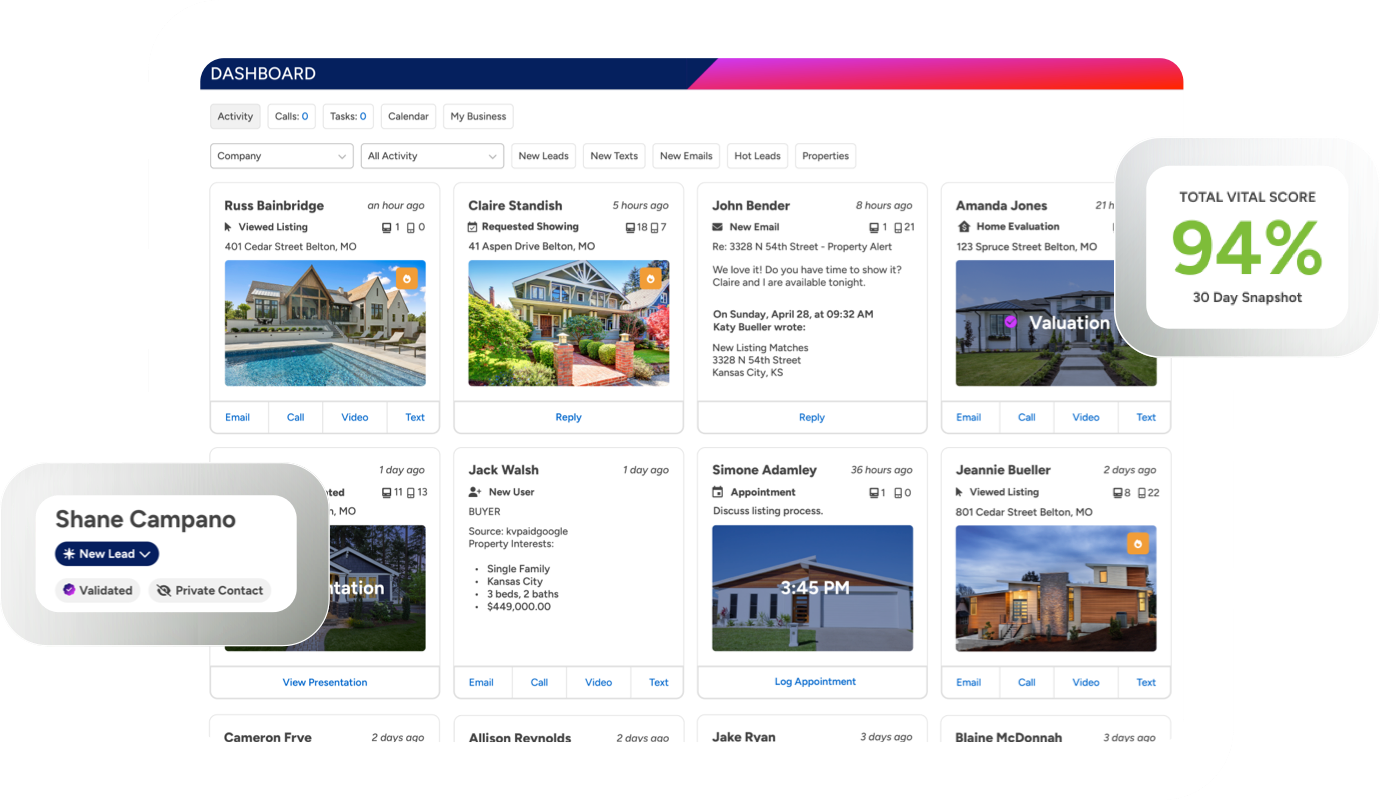
The BoldTrail Features Most Agents Never Touch
Most agents use about 20% of what BoldTrail can do. Here's the automation, lead scoring, and campaign features sitting unused in your account right now.
Most agents using BoldTrail are using maybe 20 percent of what the platform can actually do. They log in, check the dashboard, scroll through their lead list, and log out. Meanwhile the other 80 percent of the platform is sitting there configured to factory defaults, doing nothing, waiting for someone to turn it on.
This is not a criticism. BoldTrail is a genuinely complex system, and when it gets handed to an agent at onboarding, the training usually covers the basics: here is your dashboard, here is your lead list, here is how you send an email. The deeper features rarely get touched because nobody showed anyone they exist.
That is a real problem when those deeper features are the ones that actually differentiate the platform from a basic contact spreadsheet. Here is what most agents are skipping and why it is worth going back to set up.
Behavioral Automation: The Feature That Makes BoldTrail Different
This is the one that separates BoldTrail from most other CRMs on the market, and most agents have no idea it is running. Or more accurately, they have no idea that it is not running as well as it could be because nobody configured it.
BoldTrail's behavioral automation watches what your leads do on your website and responds automatically. According to BoldTrail's marketing automation documentation, when a lead views several properties, the system can automatically send them a text with additional listings. When they save a property as a favorite, it fires an email with similar homes. These are not generic blasts. They are triggered responses based on the specific action the contact just took.
The catch is that these automations need to be turned on and configured correctly. Out of the box, BoldTrail may not be running them the way you want, or running them at all, depending on how your account was set up. Log in and check your Smart Campaign settings. Look at what automations are active on your contact records. If you have leads in your system who are actively browsing properties and you are not receiving behavioral trigger notifications, something is not configured.
This is also the feature that BoldTrail's own team says drives five to ten times higher engagement compared to manual follow-up. That is not a small number. If your lead conversion feels flat, this is the first place to look.

Smart Campaigns: The Follow-Up Library Nobody Opens
BoldTrail comes with a library of pre-built Smart Campaigns covering almost every scenario an agent encounters: new buyer leads, open house follow-up, past clients, seller leads, long-term nurture, and more. These are multi-channel sequences that combine email, text, video messaging, and automated status updates into a single campaign that runs on its own once activated.
Most agents know Smart Campaigns exist. Most agents have never opened the library to see what is in it.
According to BoldTrail's help center documentation, the platform includes complete guides on Smart Campaigns and how to use them for everything from initial lead contact to long-term SOI nurturing. The campaigns can be used as-is or customized with your own messaging. You can also add shared campaigns from other BoldTrail users using sharing tokens, which means you do not have to build every sequence from scratch.
The right move is to spend an hour in the campaign library before your next busy season. Find the three or four campaigns that match your most common lead scenarios, review the messaging, adjust anything that does not sound like you, and activate them. Then when a new lead comes in from a Facebook ad or a Zillow inquiry, the campaign fires automatically and the first week of follow-up handles itself.
If you are also using Follow Up Boss for a different part of your business, it is worth understanding how BoldTrail's campaign automation compares and where the overlap creates redundancy in your stack.
Market Reports and Home Valuation Automations
This one is specifically powerful for agents who do any geographic farming or sphere nurturing, which means it is relevant to most agents reading this.
BoldTrail lets you set up automated branded market reports and home valuation estimates that go out to contacts on a scheduled basis. According to BoldTrail's platform documentation, these reports are hyper-local, pulling real-time data and highlighting active, pending, and recently sold homes in the contact's area. They go out on autopilot with your branding on them, keeping you visible to your sphere every month without you manually sending anything.
The home valuation piece is particularly useful for past clients and sphere contacts who own homes. Once you set it up, they receive a periodic update showing what their home might be worth based on current market conditions. Most homeowners find this genuinely interesting. It is the kind of touchpoint that generates a reply. "Hey, is this accurate? We have been thinking about selling."
That conversation does not happen if you are not sending the reports. Setting up the automation takes about 20 minutes. After that it runs indefinitely until you turn it off or the contact opts out.
For agents building a farming strategy, pairing this with the approach covered in our post on the farming strategy that works when postcards don't turns BoldTrail into a digital farming engine rather than just a contact database.
The Predictive Lead Score and Why You Should Trust It
BoldTrail assigns every contact in your CRM a lead score based on behavioral signals: website activity, email opens, property views, listing saves, search frequency, and recency of engagement. This score is sometimes displayed as a star rating on your contact records. Most agents scroll right past it.
The predictive score is the platform's way of telling you who is actually warming up in your database right now. According to BoldTrail's help center, the system automatically updates scores as contact behavior changes, and agents can also apply manual ratings when they have additional context from a conversation. The combination of behavioral data and agent input creates a prioritized call list that is far more reliable than sorting by last contact date.
If you have 500 contacts in BoldTrail and no system for deciding who to call first, sort by predictive score. Start at the top. The contacts who have been browsing listings in the past two weeks and recently saved three properties in the same neighborhood are not a coincidence. They are telling you something. The platform is translating that behavior into a signal. The question is whether you are reading it.

Playbooks: The Step-by-Step Listing Tool Almost Nobody Uses
BoldTrail has a feature called Playbooks that walks agents through specific business scenarios step by step, using the platform's own native tools at each stage. The most relevant one for listing agents is the Promote a Listing Playbook, which guides you through using BoldTrail's built-in tools to market a new listing from the moment it goes live.
According to BoldTrail's help documentation on Playbooks, the Promote a Listing Playbook covers creating a listing landing page, sending bulk texts and emails to your database, posting to social media with one click, and setting up targeted lead capture campaigns tied to the property. Every step uses tools that are already inside BoldTrail. You are not being told to go use a third-party tool. You are being walked through what the platform already does.
Most agents either do not know this feature exists or assume it is a sales demo gimmick. It is not. It is a systematic checklist for making sure you use more than two of BoldTrail's built-in listing marketing capabilities when you take a new listing. For agents who rely on Canva for listing graphics and manually share everything individually, the Playbook shows you how much of that workflow already exists inside BoldTrail.
Contact Validation and Enrichment
This is a quiet feature that most agents never notice is running, but it is one of the more practically useful things BoldTrail does in the background.
According to BoldTrail's Smart CRM documentation, the platform runs ongoing contact validation that verifies contact information and enriches records with outside data sources including home address, social media profiles, and life events. When a contact's information changes or a new piece of data becomes available, the system updates the record and prompts the agent to follow up at an appropriate time.
In plain language: BoldTrail is watching your database for signals that a contact's life situation has changed. A life event trigger, a new address in the record, a change in social profile information. These are the moments when people move. The platform is designed to surface them before you would ever think to look.
You do not need to configure this one. It runs automatically. But you do need to actually read the follow-up prompts BoldTrail generates from it rather than dismissing them as notifications. Those prompts are not noise. They are the system doing the prospecting work for you and handing you a reason to reach out.
Hashtags for Contact Organization
This one sounds small and it is, but it has an outsized impact on how usable your database becomes over time.
BoldTrail uses hashtags as a tagging and filtering system within the Smart CRM. You can tag contacts with custom hashtags like #seller2026, #openhouse-march, #pastclient, or #farmneighborhood and then filter your entire database by any combination of tags instantly. According to BoldTrail's hashtag documentation, hashtags can also be used to trigger automations, meaning you can set up a Smart Campaign that fires automatically whenever a contact is tagged with a specific hashtag.
The agents who use this feature well treat it like a contact segmentation system. Every new lead gets tagged by source and intent. Every past client gets tagged by transaction year and referral status. When a market shift happens and you want to reach out to a specific subset of your database, you filter by hashtag and you have your list in thirty seconds.
The agents who do not use it have a database full of untagged contacts that all look the same, which means every outreach campaign has to go to everyone or no one.

The Real Problem Is Not the Platform
The most honest review of BoldTrail you will find across G2, Capterra, and Software Advice all say the same thing in different words: the platform is powerful when it is set up intentionally and nearly useless when it is not.
One reviewer put it plainly: agents who treat BoldTrail like a business system rather than just a website or CRM see the results. Agents who never configure their automations, never activate their campaigns, and never segment their database are paying for a very expensive contact spreadsheet.
The fix is not complicated. It is a few hours of setup work that most agents keep putting off because it does not feel like doing real estate. Neither does losing a listing because a lead in your database warmed up and called someone else before you noticed.
If you want help thinking through how BoldTrail fits into a broader tech stack for a California agent, our overview of popular agent tools covers what agents are actually using alongside their CRM. And if you are wondering whether BoldTrail or another platform fits your workflow better, our post on why your CRM is collecting dust and what to do about it covers the adoption problem that affects every CRM, not just this one.
The features are already there. Most of them are already paid for. The only question is whether you are going to use them.

The Contingency Removal Mistakes That Kill California Deals
Letting a deadline pass doesn't remove a contingency in California. Here are the mistakes that quietly blow up transactions and how to stop making them.
California real estate has a form that does not exist anywhere else in the country. It is called the Contingency Removal, C.A.R. Form CR, and it is the only way a buyer's contingencies get lifted in a California transaction. Not by the deadline passing. Not by verbal agreement. Not by the buyer staying silent. Only by a signed written form delivered to the seller's agent.
According to HomeLight's breakdown of the contingency removal process, California is the only state where completing a specific form is required to lift contingencies. In most other states, passing the deadline is enough. In California, if no one signs and delivers the CR form, the contingency stays open. Indefinitely.
That one distinction is responsible for more blown California deals, lost deposits, and confused clients than almost any other piece of the purchase agreement. And the mistakes agents make around it follow predictable patterns. Here is what they are.
Mistake 1: Thinking the Deadline Removes the Contingency Automatically
This is the most common misunderstanding in California real estate, and it catches agents on both sides of the transaction.
The default inspection contingency period in the California Residential Purchase Agreement is 17 days. The loan contingency is 21 days. When those dates pass without action, many agents assume the contingencies are gone. They are not.
According to the California Association of Realtors' quick guide on contingency removal, contingencies are not waived automatically after the deadline passes. Elapse of the time period allows the seller to deliver a Notice to Buyer to Perform, giving the buyer two days to remove them. If the buyer still does not act, the seller may cancel. But until that process plays out in writing, the contingency is still technically open.
What this means in practice: a listing agent who thinks the inspection contingency was automatically removed at day 17 may be completely wrong. The buyer, if they have not signed a CR form, can still technically cancel under that open contingency and walk away with their deposit. Unless the seller's agent has been tracking the deadlines and issuing the right notices, the deal may be far less locked down than anyone thinks.

Mistake 2: Sending a Request for Repair Instead of Removing the Contingency
This one is subtle and extremely common. An agent who represents the buyer sends a Request for Repair on day 17, the last day of the inspection contingency period. They figure that making the repair request satisfies the requirement to act within the time specified. It does not.
As ellisposner.com's breakdown of California contingencies explains clearly, the RPA states that a buyer may submit a Request for Repair within the time specified, but it also states that by the end of that same time period, the buyer shall deliver a removal of the applicable contingency or a cancellation. Submitting a repair request and removing the contingency are two separate actions. Doing one does not satisfy the other.
The practical consequence: a buyer's agent sends the RR on day 17 thinking they have checked the box. The inspection contingency deadline passes without a signed CR form. The deal appears to be moving forward. But technically the contingency is still open, and if the repair negotiation falls apart later, there may be confusion and disputes about whether the buyer can still cancel and recover their deposit.
The right move is to submit the Request for Repair and either remove the contingency simultaneously with the expectation that repairs will be negotiated as a separate matter, or request a written extension of the contingency period to allow time for the repair negotiation to conclude. Both parties need to understand what is in writing and what is not.
Mistake 3: Removing the Loan Contingency but Forgetting the Appraisal
This one changed when the CAR revised the RPA. For a long time, the loan and appraisal contingencies were bundled together, and removing the loan contingency was deemed to also remove the appraisal contingency. That is no longer the case.
As Compass regional risk management director Kathy Mehringer has written, the current RPA specifically states that removal of the loan contingency shall not be deemed removal of the appraisal contingency. They are two separate and independent contingencies that must each be removed individually, on separate lines of the CR form or on separate CR forms.
An agent who removes the loan contingency but forgets to address the appraisal contingency has a buyer who is committed on financing but can still technically cancel if the appraisal comes in low. That may be exactly the right protection to leave in place, depending on the situation. The problem is when the agent does not realize the appraisal contingency is still open and the seller's agent does not realize it either. Nobody is tracking it, and the deal drifts toward closing with an unresolved contingency that could surface at the worst possible time.
Know what you have signed, what you have not, and what is still open. Every line of the CR form matters.
Mistake 4: Advising a Buyer to Waive Contingencies Without Explaining the Stakes
In a competitive California market, buyers are regularly advised to remove contingencies to make their offer more attractive. Sometimes that is the right strategic call. Often it is a decision the buyer does not fully understand until something goes wrong.
According to LegalMatch's guide to California real estate contingencies, buyers who waive the loan contingency and later cannot obtain financing may be in breach of contract and risk losing their earnest money deposit. On a California home at median prices, that is a deposit of 1 to 3 percent of the purchase price. On a $900,000 home in Southern California, that is $9,000 to $27,000. Gone.
The deposit risk does not only apply to financing. A buyer who waives the inspection contingency and later discovers a foundation problem they did not know about has no contractual protection. They can still walk away from the deal, but they may not be able to recover their deposit.
As one Orange County agent's analysis of the contingency removal process describes, this is not a theoretical risk. It happens in Southern California every single month to buyers who are guided by agents who prioritize winning the bid over protecting the client.
The right approach is not to avoid advising a buyer to waive contingencies. It is to make sure the buyer understands exactly what they are giving up before they do it, and to document that conversation.

Mistake 5: Not Tracking the Deadlines at All
This is the simplest mistake and the one that creates the most chaos. The RPA has multiple contingency deadlines, and they do not all fall on the same day. The inspection contingency default is 17 days. The loan contingency is 21 days. The appraisal contingency is 17 days. If any of these were shortened in the offer or counteroffer, the dates shift. If the acceptance date is counted incorrectly, every deadline is wrong.
Agents who are running multiple transactions, handling their own paperwork, doing their own follow-up, and managing client communications simultaneously are the most vulnerable to letting a contingency deadline slip past without anyone requesting removal. According to CAR's contingency quick guide, the seller cannot cancel the deal simply because a deadline has passed. They must first deliver a Notice to Buyer to Perform. But if the listing agent is also not tracking the deadlines, no one issues the NBP, the contingency stays open, and the transaction drifts.
For buyers, an open contingency that nobody is tracking is actually a hidden safety net that may benefit them if the deal turns sour. For sellers, it is exposure they do not know they have. For agents on both sides, it is a potential liability depending on what happens next.
A transaction coordinator tracks every deadline in the contract from the day of acceptance. That is not an extra service. For California deals, it is the baseline.
Mistake 6: Not Knowing How the Notice to Buyer to Perform Actually Works
When a contingency deadline passes without removal, the seller's next move is to issue a Notice to Buyer to Perform. Many agents know this form exists. Fewer understand exactly how it works.
According to C.A.R. Form NBP and the RPA's Paragraph 14, the seller must deliver the NBP in writing, with receipt acknowledged by the buyer. Once delivered, it starts a 48-hour countdown. The buyer has 48 hours to remove the specified contingency or take the specified contractual action. If they do not, the seller has the right to cancel the agreement.
Two things agents get wrong about this process. First, a seller cannot cancel the agreement simply because a deadline has passed. They must issue the NBP first. As showmehome.com's analysis of California contingencies confirms, if the 48 hours pass and the buyer does not act, the seller then has the right to cancel unilaterally. Without the NBP being properly delivered and acknowledged, the seller's right to cancel is not fully established.
Second, if a seller cancels after delivering a valid NBP and the buyer fails to remove contingencies, the seller must authorize the return of the buyer's deposit. The NBP is the mechanism for establishing the seller's right to cancel. It is not the mechanism for keeping the deposit. That right only attaches once the buyer has actually removed their contingencies and then defaults.
Understanding the sequence matters. The NBP, the contingency removal, the liquidated damages clause. They work together in a specific order, and skipping a step or misunderstanding the sequence can leave a seller without the protections they thought they had.

What Happens When It Goes Wrong
The best case scenario when contingency removal is mishandled is a delayed close and a tense phone call with the other agent. The realistic scenario is a deal that falls apart, a deposit dispute that ends up in arbitration, and a client who is either stuck in a contract they cannot exit cleanly or out of a house they wanted with no legal recourse.
California courts have consistently ruled that contingency removal obligations are strictly enforced. A buyer who removes their inspection contingency in writing and then tries to cancel because of a problem they knew about during the inspection period has limited options. A seller who cancels without properly delivering an NBP may not have the right to keep the deposit even if the buyer defaulted on the deadline.
The forms, the sequence, and the deadlines are not bureaucratic box-checking. They are the legal foundation of whether a party has rights in a dispute. Getting them wrong does not just inconvenience a deal. It can change who wins.
For agents who want to ensure their California transactions have solid disclosure and compliance paper trails from acceptance to close, our transaction coordination services are built around exactly this kind of oversight. And if you want to understand more about how the disclosure side of a California transaction intersects with the contingency timeline, our post on why selling real estate in California is unlike anywhere else covers the full picture.
Contingency removal is where a lot of California deals quietly fall apart. It does not have to be.

What Zapier Can Do for a Solo Agent With No Admin Support
Zapier connects the apps you already use and automates the tasks you keep forgetting. Here's what that actually looks like for a solo real estate agent.
Here is a Tuesday afternoon scenario that most solo agents will recognize. You have a showing at 2, a contract to review by 4, and three leads sitting in your email from a Facebook ad that ran over the weekend that you have not had time to enter into your CRM. One of them filled out the form on Friday night. It is now Tuesday.
That lead called someone else on Saturday morning.
This is not a hustle problem. It is a systems problem. When every task in your business requires you to manually move information from one place to another, the gaps in your day become the gaps in your pipeline. Zapier closes those gaps without requiring a hire.
Here is what it actually does and how solo California agents are using it right now.
What Zapier Actually Is
Zapier is a no-code automation tool that connects the apps you already use and runs tasks between them automatically. You create a workflow, called a Zap, by defining a trigger and an action. When X happens in one app, Y happens in another. No code required. No technical background needed.
The platform connects with over 7,000 apps including Follow Up Boss, Google Forms, Gmail, Calendly, Google Calendar, Facebook Lead Ads, Slack, and dozens of other tools agents use daily. Once a Zap is live, it runs in the background every time the trigger fires, whether you are in a showing, at the gym, or asleep.
According to Zapier's own data on real estate automation, the most common time drain for agents is manually moving lead information from one source into a CRM, a task that is repetitive, error-prone, and completely automatable. That is the starting point for most agents who build their first Zap, and it rarely stays the only one.
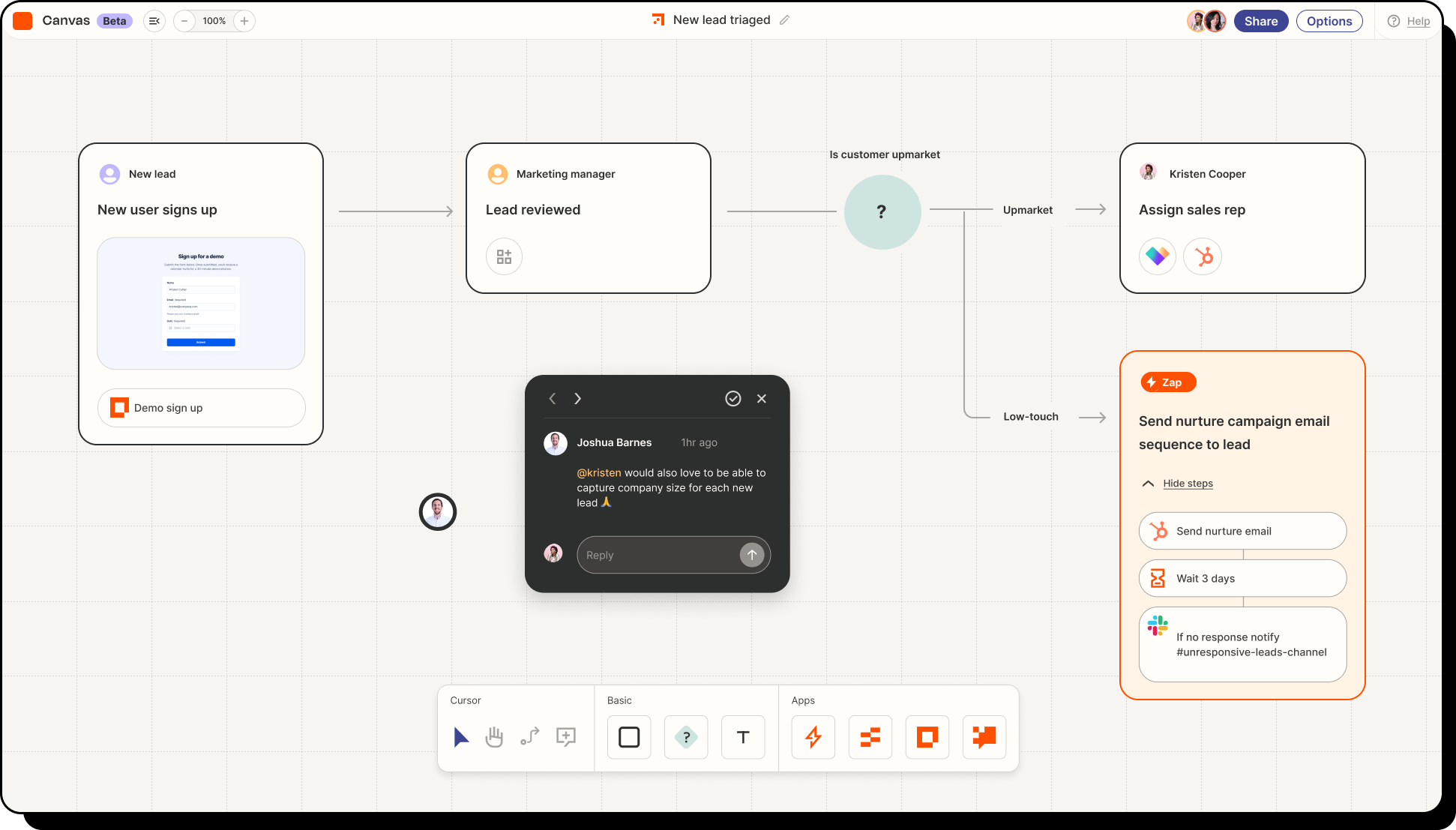
Automation 1: Lead Capture Into Your CRM Automatically
This is the one every agent needs first. You are running Facebook Lead Ads, your website has a contact form, maybe you have a home valuation widget. Each of those sources captures a lead. Without Zapier, you manually check each one and then manually enter that person into your CRM. With Zapier, the moment a form is submitted, the contact is created in Follow Up Boss, tagged by source, and dropped into the right action plan without you touching anything.
According to Zapier's guide to automating Follow Up Boss, you can set up Zaps that pull leads from Facebook Lead Ads, website inquiry forms, Zillow, Realtor.com, and virtually any other lead source and funnel them all into a single CRM automatically. Every lead from every source lands in one place, correctly tagged, ready for follow-up.
The practical result: you open Follow Up Boss in the morning and every lead from the past 24 hours is already there, organized, with source information attached. You spend zero time on data entry and none of your leads age in an email inbox waiting for you to notice them.
For agents already using Follow Up Boss, Zapier's integration with Follow Up Boss is one of the most documented and well-supported in the real estate space. The setup takes minutes and the pre-built Zap templates handle the most common configurations out of the box.
Automation 2: Instant Lead Notification So You Follow Up in Minutes
Capturing a lead automatically is only half the equation. The other half is knowing about it fast enough to do something about it.
Research cited by WiserNotify consistently shows that agents who follow up within five minutes of a new inquiry are ten times more likely to convert that lead than those who respond later. Most solo agents are not checking their CRM every five minutes. Most are in showings, driving, or on the phone.
A Zapier notification Zap solves this. When a new lead enters Follow Up Boss, Zapier fires an SMS or a push notification to your phone with the lead's name, source, and contact information. You see it the moment it happens. You can call from the parking lot before the other three agents they also contacted have even looked at their phones.
According to Zapier's real estate automation hub, cutting lead response time is one of the highest-return automations an agent can build, and it is also one of the simplest. The Zap is two steps: new contact in Follow Up Boss triggers an SMS via Zapier's native SMS tool. Setup time is under ten minutes.
Automation 3: Open House Sign-Ins That Feed Directly Into Follow Up Boss
Open houses generate leads that agents routinely lose. The sign-in sheet gets left on the counter, photographed on a phone, and never entered anywhere. Or it gets entered a week later when the leads have already gone cold.
Follow Up Boss's own help documentation walks through exactly how to build a Google Forms and Zapier integration that captures open house sign-ins and pushes them directly into Follow Up Boss as new leads in real time. The setup requires a Google Form with name, email, and phone fields, a Google Sheet to collect responses, and a Zap that watches that sheet and creates a new contact in Follow Up Boss every time a row is added.
Visitors sign in on your tablet at the open house. By the time you are locking up and putting away the sign, every person who attended already has a Follow Up Boss contact with the open house tagged as their source. Your follow-up sequence fires automatically. You do not write a single name down by hand.
This is one of the automations that solo agents most consistently say changed how they run their business. The open house lead that used to fall through the cracks becomes the call you make from your car on the way home.

Automation 4: Showing Appointment Reminders Without Lifting a Finger
No-shows waste an agent's afternoon. A buyer forgets the time. A seller does not realize you were coming at 3 and leaves the house. A few automated reminders would have prevented all of it, but most solo agents do not have a system for sending them consistently.
Zapier connects Calendly to Google Calendar and Gmail in a way that fires confirmation emails and reminder texts automatically when a showing is booked. The moment a client schedules time on your Calendly link, three things happen without you touching anything: the event drops into your Google Calendar, a confirmation email goes to the client with the address and any showing instructions, and a reminder fires 24 hours before the appointment.
According to Zapier's guide for solopreneurs, automated appointment reminders are consistently one of the highest-impact Zaps for solo operators because the time wasted on no-shows and back-and-forth scheduling is eliminated entirely. One business coach documented cutting their no-show rate significantly after adding a single reminder Zap.
For agents, the downstream effect is just as important. When your calendar automation is reliable, you stop double-booking. You stop forgetting to send the address. You stop arriving at showings where the client has the wrong time. The Zap handles what admin support would have handled.
Automation 5: New Client Onboarding on Autopilot
The moment a new client signs a buyer representation agreement or a listing agreement, a predictable set of things needs to happen: they get a welcome email, they get added to your CRM with the right tags, they get a calendar invite for the kickoff call, and depending on your workflow, they may get a link to your preferred TC intake form.
Without automation, this is a 20-minute manual process that gets done inconsistently and skipped entirely when you are busy. With Zapier, it is a sequence that fires the moment the trigger event happens.
The setup varies depending on what tools you use, but a basic onboarding Zap works like this: when a new client is tagged in Follow Up Boss or a signed document arrives in your email from your e-signature tool, Zapier fires a welcome email from Gmail with your onboarding information, creates a task in your CRM for the kickoff call, and adds the client to your preferred email list for buyer or seller content. The whole sequence runs automatically while you are at the signing table.
For agents working with a transaction coordinator, this is also where the handoff can be automated. A Zap can notify your TC the moment a new transaction is tagged in Follow Up Boss, sending them the client name, property address, and relevant notes without you having to make a separate call or send a separate email. Our page on what a transaction coordinator does covers what that handoff looks like when it works well.
How Much Does Zapier Cost and Is It Worth It
Zapier has a free plan that allows up to 100 tasks per month across five single-step Zaps. For a solo agent just starting out with two or three automations, the free plan is enough to get meaningful value immediately.
The Starter plan runs around $19.99 per month and unlocks multi-step Zaps, which is where the real power sits. The open house flow, for example, requires multiple steps: watch the Google Sheet, create the contact in Follow Up Boss, tag the contact, fire the action plan. That is a multi-step Zap that requires a paid plan.
For context, according to Zapier's case study on Realty Investment Advisors, the team cut their lead follow-up time by 90% after building their automations. For a solo agent who closes ten transactions a year at an average California commission, saving even one lead that would have gone cold is worth multiples of the annual Zapier subscription.
The question is not really whether Zapier is worth it. The question is whether your current manual process is costing you more than $20 a month in missed leads and wasted time. For most solo agents, the answer is obvious.
Where to Start If You Have Never Used It
The most common mistake agents make with Zapier is trying to build too much at once. Pick one problem. The lead that sits in your email too long. The open house sign-in that never makes it into your CRM. The showing confirmation you forget to send. Start there.
Build one Zap. Test it with real data. Watch it run for two weeks. Then build the next one.
Zapier's real estate automation page has pre-built templates for most of the common agent workflows, which means you are not starting from a blank screen. Many of the Zaps described in this post can be cloned from existing templates and customized in under ten minutes.
If you are already using Follow Up Boss, start with the Facebook Lead Ads to Follow Up Boss Zap. It is the most immediate value, the simplest setup, and the one that will make you wonder how you ever ran without it.
Once your automations are running, the time you get back goes somewhere worth spending. More conversations with clients. More showings. More time building the referral relationships covered in our post on how to turn every failed transaction into three future referrals. Automation does not replace the relationship part of real estate. It clears the path to it.
Sign up for Weekly Blog Updates
Get our latest posts on lead generation, transaction coordination, and tools that save you time.
