Loan Officer Partnerships: The Lead Source You Skip
Every Lender Pitch You've Ignored Says the Same Thing
You have a stack of business cards from loan officers who bought you a coffee once. Maybe a lunch. They said something about "partnering up" and "sending each other business," and you nodded, because that's what you do when someone else is paying for your sandwich. Then you never spoke to them again.
Meanwhile you're spending real money on portal leads that half answer their phone and ghost you after showing three houses. Somewhere in your contacts is a person whose entire job depends on the same buyers you're chasing, and you've filed him under "networking, maybe."
That's the gap. Not a lack of leads. A lack of follow through on a lead source that's already sitting there, pre qualified, motivated, and structurally aligned with your business in a way Zillow will never be.

Why Referrals Still Run This Business
Here's the part agents forget when they're deep in a Facebook ad spend spiral. According to the National Association of Realtors, forty three percent of buyers found their agent through a referral, and eighteen percent used an agent they had already worked with. That's the majority of buyer side business coming from relationships, not clicks. Read the full breakdown from NAR if you want the rest of the numbers.
A loan officer talks to prospective buyers earlier than you do, in almost every case. Someone gets serious about buying, they start with a pre approval conversation, and only after that do they start touring homes with an agent. That means a good loan officer sees your future client before you do. If that loan officer has three agents they trust and you're not one of them, you're losing deals you never even knew existed.
This isn't a replacement for your past clients as a lead source or the warm referral system you're already running. It's an addition. A parallel pipeline that requires almost no ad spend and, done right, sends you people who are already financially vetted before you ever get a call.
The Line You Cannot Cross
Before you go set up a "partnership," you need to understand the boundary, because this is where agents get themselves and their lenders into real trouble.
RESPA Section 8 prohibits paying or receiving kickbacks for referring settlement service business, and that includes mortgage referrals. You cannot take a fee for sending someone to a specific loan officer. You cannot split commissions for referrals. And marketing arrangements that look like a co-branded newsletter or a shared open house sign but are actually structured as payment for referrals have landed both lenders and brokerages in consent orders with civil penalties in the hundreds of thousands to millions of dollars.
The CFPB's own compliance FAQ on RESPA is worth an actual read, not a skim, especially the section on marketing services agreements. The short version: you can co-market. You can split the cost of an ad that promotes both of you equally. You cannot pay, or be paid, for the referral itself, and you cannot structure a marketing deal that's secretly a referral fee with extra paperwork.
California agents also answer to the DRE's broker relationship rules, so if you're unsure whether an arrangement crosses a line, that's a conversation for your broker or a real estate attorney, not a guess based on what your last brokerage let you get away with.
What an Actual Partnership Looks Like
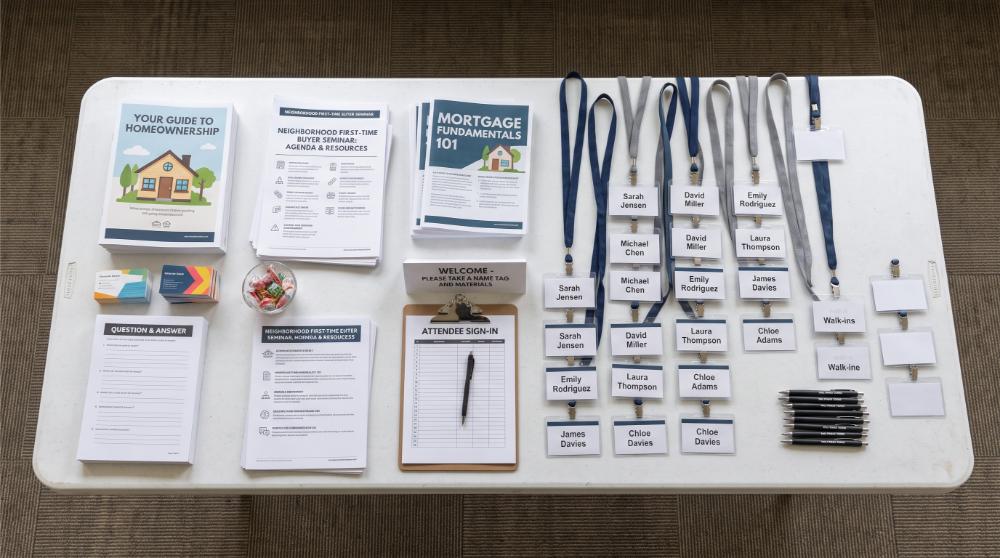
Strip out anything that resembles payment for referrals and you're left with a surprisingly wide field. Co-hosted first-time buyer seminars where you split the venue cost and both speak. Joint content, like a monthly email that goes to both of your databases with genuinely useful information, not a thinly veiled ad. A shared print piece for a neighborhood mailer, similar in spirit to the kind of mailer that doesn't get thrown out, but co-branded and cost split evenly.
You can refer clients to each other based on trust and track record, full stop, with no fee attached in either direction. That's not a loophole. That's the entire point. The relationship has to be valuable on its own merits, not propped up by money changing hands under the table.
Finding a Loan Officer Worth Partnering With
Most agents pick a lender the way they pick a barber. Whoever's closest, whoever a friend mentioned once. That's backwards for a relationship you're hoping to build for years.
Look at how fast they respond to pre approval requests on nights and weekends, because your buyers don't stop looking at houses after 5pm and neither should their financing person. Ask other agents who they actually trust, not who sends the nicest holiday card. Watch how they handle a file that gets complicated, a self-employed buyer, a low appraisal, a rate lock that's about to expire mid-escrow. The loan officers worth keeping are the ones who call you with bad news early instead of letting it surface three days before closing.
If you already work with a transaction coordinator, ask them who they've seen handle deadlines well. TCs see loan officers at their best and worst more than almost anyone, because managing the lender relationship is part of what keeping a file on track actually requires. That's not a bad source of intel.
Building the Relationship Without Making It Weird
Don't lead with "let's send each other business." That's the fastest way to make someone feel like a transaction instead of a partner, and it also edges uncomfortably close to the RESPA line if either of you starts treating the arrangement as quid pro quo.
Lead with something useful instead. Send them a client who needs financing, with zero expectation attached, and see what they do with it. Do that two or three times before you ever have "the conversation" about formalizing anything. Trust built through actual behavior beats a handshake agreement every time, and it protects both of you if anyone ever asks how the relationship works.
Keep the cadence low pressure. A quarterly check-in call, a shared lunch twice a year, a text when you see market news relevant to both of you. This isn't a courtship. It's a long, quiet accumulation of reasons to trust each other, the same way a lead magnet earns trust before it earns a client rather than demanding one upfront.

When the Loan Officer Becomes the Weak Link
Here's the part nobody wants to admit. Sometimes the loan officer is the reason a deal falls apart. Slow to respond. Vague about conditions. The kind of person who says "we're on track" until the day before closing, when suddenly they're not.
If that's happening more than once, it's not bad luck. It's information. Track it the way you'd track any lead source that isn't converting, because a referral partner who costs you deals is worse than no partner at all. A CRM that actually shows you deal-level notes tied to each partner helps here, and if your CRM is currently collecting dust instead of tracking this kind of thing, that's a separate problem worth fixing.
This is also where a transaction coordinator earns their fee twice over. A good TC keeps the pressure on every party in the file, lender included, so a slow loan officer gets caught in week two instead of week six. If you're managing ten files solo and can't tell which of your lender partners is quietly costing you closings, that's usually a sign you're past due for help.
Make the Referral a Two Way Street
The partnerships that last are the ones where both people are actually sending business, not just one person hoping the other remembers them at the right moment. If you're only ever the one receiving, the relationship has an expiration date, because the loan officer will eventually find an agent who sends deals back.
Look at your own preferred vendor list and be honest about whether it's a real resource or a graveyard of names you collected once. A short, curated list of two or three loan officers you genuinely trust, that you send to every client who needs financing, is worth more than fifty contacts you can't tell apart.
If you want to see how Relaxed Agent fits into the file once financing, disclosures, and deadlines all start moving at once, take a look at what our team actually handles or just reach out and ask us directly. We're not selling you a lender relationship. We're the people making sure the one you already have doesn't blow up your escrow.
Next time a loan officer buys you coffee and mentions partnering up, don't nod and forget. Send them a client. See what they do with it. That's the whole test.