You ran the ad. Someone searching "sell my house fast Sacramento" saw it, clicked it, and landed on your homepage.
Now they're staring at a hero image of you smiling in front of a house, a navigation bar with nine menu items, a rotating carousel of featured listings that have nothing to do with what they searched, and a headline that says something like "Your Trusted Real Estate Partner." Somewhere below the fold, buried behind two scrolls, is maybe a mention of home valuations.
They close the tab. You paid for that click. You got nothing back.
This happens constantly, and most agents never notice because the ad platform still reports the click as a success. The money left your account, the traffic showed up, the analytics dashboard says visitors arrived. What it doesn't tell you, at least not obviously, is that the destination page was built for a different job entirely, and that mismatch is where your ad budget quietly disappears.
Two Pages With Two Completely Different Jobs
A homepage and a landing page look similar. Both have your branding, both have a headline, both probably have a photo of you or a property. But they exist to do fundamentally different work, and treating them as interchangeable is where most of this problem starts.
Your homepage is a hub. Its job is to orient a visitor who arrived without a specific intention yet. Maybe they heard your name from a friend. Maybe they found you through an organic Google search for your name. Maybe they're a past client checking if you're still active. That visitor doesn't know exactly what they want from your site, so the homepage has to offer multiple paths: buyer info here, seller info there, a blog, a contact page, an about page. It's built for breadth.
A landing page is a funnel. Its job is to take a visitor who already has a specific intention, formed the moment they clicked your ad, and move them toward exactly one action. No multiple paths. No broad audience. One visitor type, one message, one next step.
When you send someone who clicked "free home valuation" to your homepage, you've taken a visitor with a narrow, specific intent and handed them a hub built for everyone. They have to hunt for the thing they came for. Most people don't hunt. They leave.
According to Unbounce's landing page benchmark report, dedicated landing pages convert visitors at meaningfully higher rates than homepages receiving the same paid traffic, specifically because they remove the decision paralysis of a multi-purpose page. The difference isn't cosmetic. It's structural.
The Cost Nobody Notices Until They Calculate It
Here's the part that should actually sting a little. If you're running Google Ads or Facebook ads and sending every click to your homepage, you're not just losing conversions. You're paying more per click than you need to.
Google's Quality Score system factors landing page relevance directly into how much you pay for each click. An ad about "homes for sale in Roseville under $600k" that sends traffic to a generic homepage scores lower on relevance than the same ad sending traffic to a Roseville-specific page built around that exact price range. Lower relevance score means higher cost per click for the same ad position. You're paying a premium to send people somewhere that doesn't match what you promised them.
Run the math on this for a month. If your cost per click goes up 20 to 30 percent because your landing experience doesn't match your ad, and your conversion rate on that mismatched page is also lower, you're losing on both ends of the same transaction. The ad platform is charging you more to deliver a worse experience that converts at a lower rate. That's not a small leak. That compounds every single day the campaign runs.
What a Real Landing Page Actually Contains
A landing page strips away almost everything a homepage has, on purpose.
Start with navigation. Your homepage needs a full menu because visitors are exploring. A landing page should have little to no navigation at all, because every link is an exit ramp away from the one action you want. If someone clicked an ad for a free market report and your landing page still has a menu bar with "Buyers," "Sellers," "Blog," "About," and "Contact," you've given them five ways to wander off before they've done the one thing you actually paid to get them to do.
The headline on a landing page should mirror the promise from the ad almost exactly. If your ad said "See what homes are actually selling for in your neighborhood," your landing page headline should restate that same promise in nearly the same words. This is called message match, and it matters more than most agents realize. A visitor who clicks an ad and lands on a page with a different headline experiences a split second of doubt: did I click the right thing? That doubt costs conversions.
Below the headline, the page needs exactly one call to action, repeated if the page is long, but never competing with a second offer. A landing page that offers a home valuation and also promotes an open house and also has a newsletter signup is a landing page with three different jobs, which means it does none of them particularly well.
Social proof belongs here too, but scaled to the specific offer. If the landing page is about selling a home fast, the testimonial should be from a seller, ideally one who sold quickly, not a generic quote about how wonderful you are to work with in general.
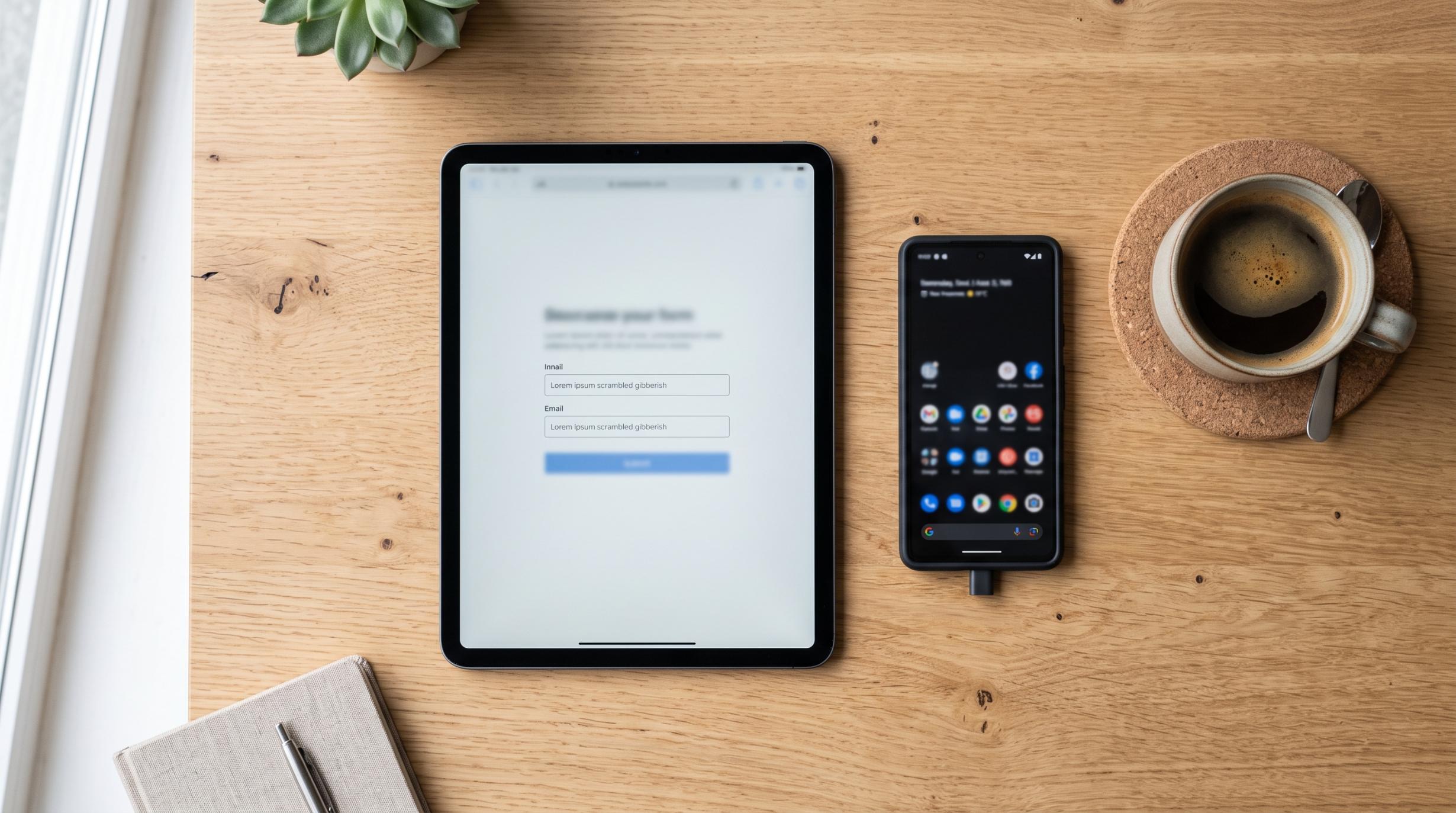
And the form itself should ask for the absolute minimum. Name, email, maybe a phone number if the offer genuinely requires a call back. Every additional field you ask for reduces submission rates. Research on form length and conversion consistently shows that shorter forms outperform longer ones, sometimes dramatically, especially for cold paid traffic that hasn't built any trust with you yet.
Matching the Page to the Traffic Source
Not all paid traffic wants the same landing experience, and this is where a lot of agents flatten everything into one generic page and call it done.
Someone clicking a Google search ad for "homes for sale in [specific neighborhood]" has already typed a specific query. They know exactly what they're looking for. Their landing page should be a neighborhood-specific page with current listings in that area, not a generic buyer page that mentions your whole service area.
Someone clicking a Facebook ad about a free home valuation has a completely different mindset. They weren't actively searching for anything. They were scrolling, something caught their eye, and they clicked out of curiosity or mild interest. Their landing page needs to work harder to re-establish the offer and build quick trust, because they arrived with less pre-existing intent than a search visitor did.
Someone clicking a retargeting ad, someone who already visited your site once before, needs yet another kind of page. They've seen you already. A page that repeats your entire pitch from scratch wastes their patience. A page that picks up where they left off, referencing the listing or content they previously viewed, converts better because it acknowledges the relationship already exists.
Treating all three of these as the same "just send them to my homepage" problem is exactly how paid traffic underperforms across every channel simultaneously.
The Homepage Isn't the Villain Here
None of this means your homepage is badly built or needs to be scrapped. Your homepage still has an essential job for the traffic it's actually suited for: organic visitors, referral traffic, people who found you through word of mouth and typed your name into Google directly.
If you've worked on writing homepage copy that actually converts, that work isn't wasted. It's just aimed at a different audience than your paid campaigns are. The mistake isn't having a strong homepage. The mistake is assuming a page built for browsing visitors will perform equally well for visitors who arrived with a specific, narrow intent and zero patience for exploring.
Think of it as two different doors into the same house. The homepage is the front door, open to anyone who wants to look around. The landing page is a side door built for a specific delivery, one truck, one package, one destination inside the house. Sending your delivery truck through the front door and hoping it finds its way to the right room eventually is how you lose half your deliveries.
Building One Doesn't Require a Developer
If your website runs on Webflow, building a dedicated landing page takes well under an hour for most agents. Duplicate an existing page, strip the navigation and footer down to nothing or close to it, rewrite the headline to match your specific campaign, and drop in one clear call to action.
That's the entire structural difference between a regular page and a landing page: the removal of exits. Every navigation link, every footer menu, every unrelated call to action is a door out of the page before the visitor does the one thing you actually want. A landing page closes those doors deliberately.
If you're running more than one campaign at a time, and most agents eventually are, build a landing page per campaign type rather than one universal page for all paid traffic. A buyer-focused landing page, a seller-focused landing page, and if you also market to other agents for transaction coordination services, a landing page speaking directly to agents rather than consumers. Each one should feel like it was built specifically for the person who's about to land on it, because in a sense, it was.
Checking Whether This Is Actually Your Problem
Before rebuilding anything, look at what's actually happening right now. Pull up Google Analytics and check your landing pages report. This shows which pages visitors are entering your site on. If your homepage accounts for the overwhelming majority of entrances even though you're running paid campaigns with specific offers, that's the signal. You're sending targeted traffic to an untargeted destination.
Cross-reference that with your source and medium report. If your paid traffic is landing predominantly on the homepage while your organic traffic lands on specific blog posts and service pages, you have a clear, fixable gap between what you're paying for and where you're sending it.
Google Search Console adds one more layer if your paid campaigns overlap with organic search intent. It shows which queries are driving traffic to which pages, which can reveal whether people searching very specific things are landing on pages that don't answer their specific question.
This audit takes about twenty minutes and tells you more about where your ad budget is actually going than any amount of guessing. If you're already thinking through why your Facebook ads keep attracting the wrong buyers, the landing page is often the second half of that same problem. Good targeting followed by a mismatched destination still produces the same disappointing result: leads that don't convert and budget that doesn't come back.
One Door, One Job
Every paid click you generate is a person who had a specific reason to click, even if that reason was small. Respecting that reason by giving them a page built specifically for it is not an advanced marketing tactic. It's the baseline expectation for anyone spending real money on ads in 2026.
Your homepage will always matter. It just isn't the right door for traffic that already knows what it's looking for.
Pull up your last campaign's landing page report today. See where the clicks actually went. If it's your homepage, that's not a marketing problem you need an agency to solve. It's an afternoon of work you can do yourself.